
How to Fix Squeaky Stairs
By Dave Emery, Owner & Stair Builder Updated August 2026
A squeaky stair is almost always fixable yourself, and it's usually a quick job. Below is the same sequence of fixes we'd try first before ever recommending a repair, useful whether or not you ever call us. If the squeak doesn't go away after trying these, that's the point where we'll fix it right instead.
We're putting the real fixes up front, not gatekeeping them behind a service call. A squeak is one of the most common reasons people search for a wood stair repair, and in the large majority of cases, it doesn't need one. It needs twenty minutes and a drill.
Why stairs squeak in the first place
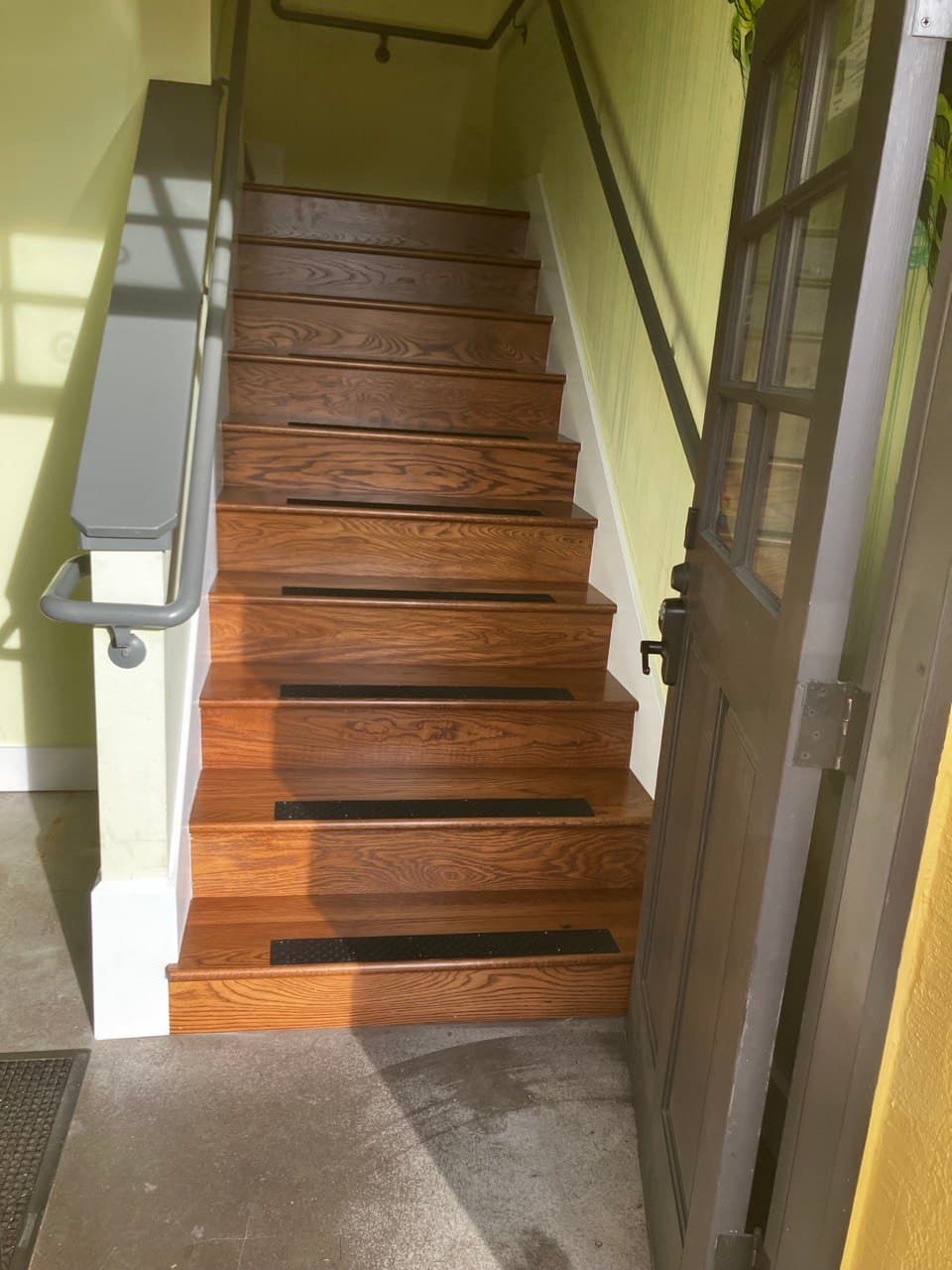
A squeak is friction, and friction shows up for a handful of predictable reasons. Loose treads or risers develop small gaps as wood wears and shifts over years of foot traffic, and those gaps are where the noise comes from. Seasonal humidity and temperature swings make it worse: wood shrinks and opens up gaps in dry seasons, then swells and binds tight in humid ones, which is especially relevant in Portland, where a stair frame goes through a wet winter and a dry summer every single year. Loose nails or screws work free from that same seasonal movement over time, a phenomenon sometimes called "nail pops," leaving fasteners that no longer hold their joint snugly. And once any of that has happened, you're left with wood-on-wood friction at the joint itself: two surfaces rubbing against each other with nothing to stop them, which is the sound you're hearing. None of these causes are unusual or a sign of poor original construction; they're simply what happens to any wood staircase over years of use, which is exactly why the fixes below are routine rather than exotic.
DIY fixes to try first
Work through these in order. Most squeaks resolve at step one or two, and you don't need to go further than what fixes yours.
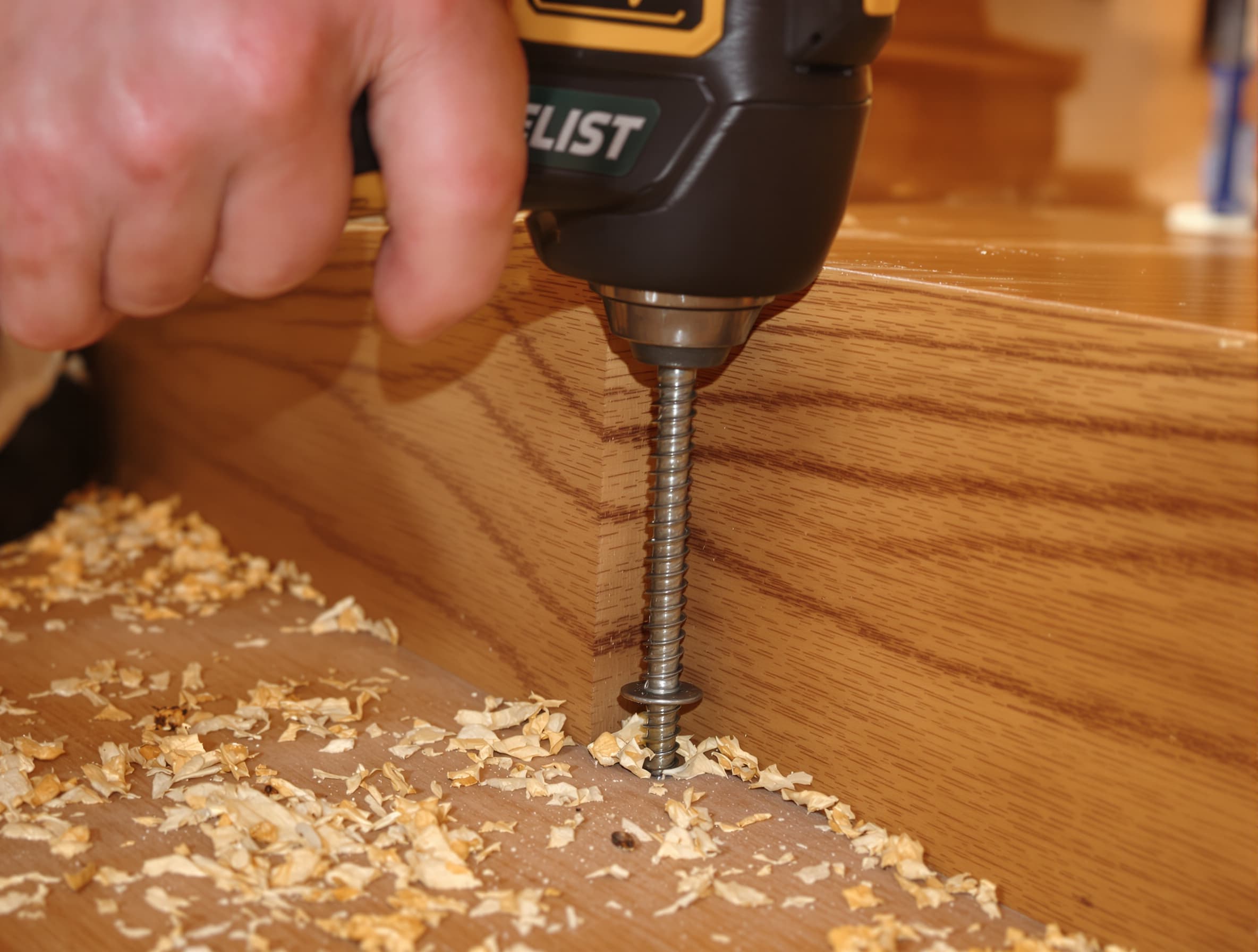
Tighten existing screws or nails first. This alone is often the whole fix. A fastener that's simply backed out slightly can be the entire source of the noise.
Drive new screws at an angle through the tread into the riser. Use two screws per joint, sized so they don't poke through the finished side of the wood.
Apply wood glue or construction adhesive into the joint gap wherever you can access it from underneath the staircase.
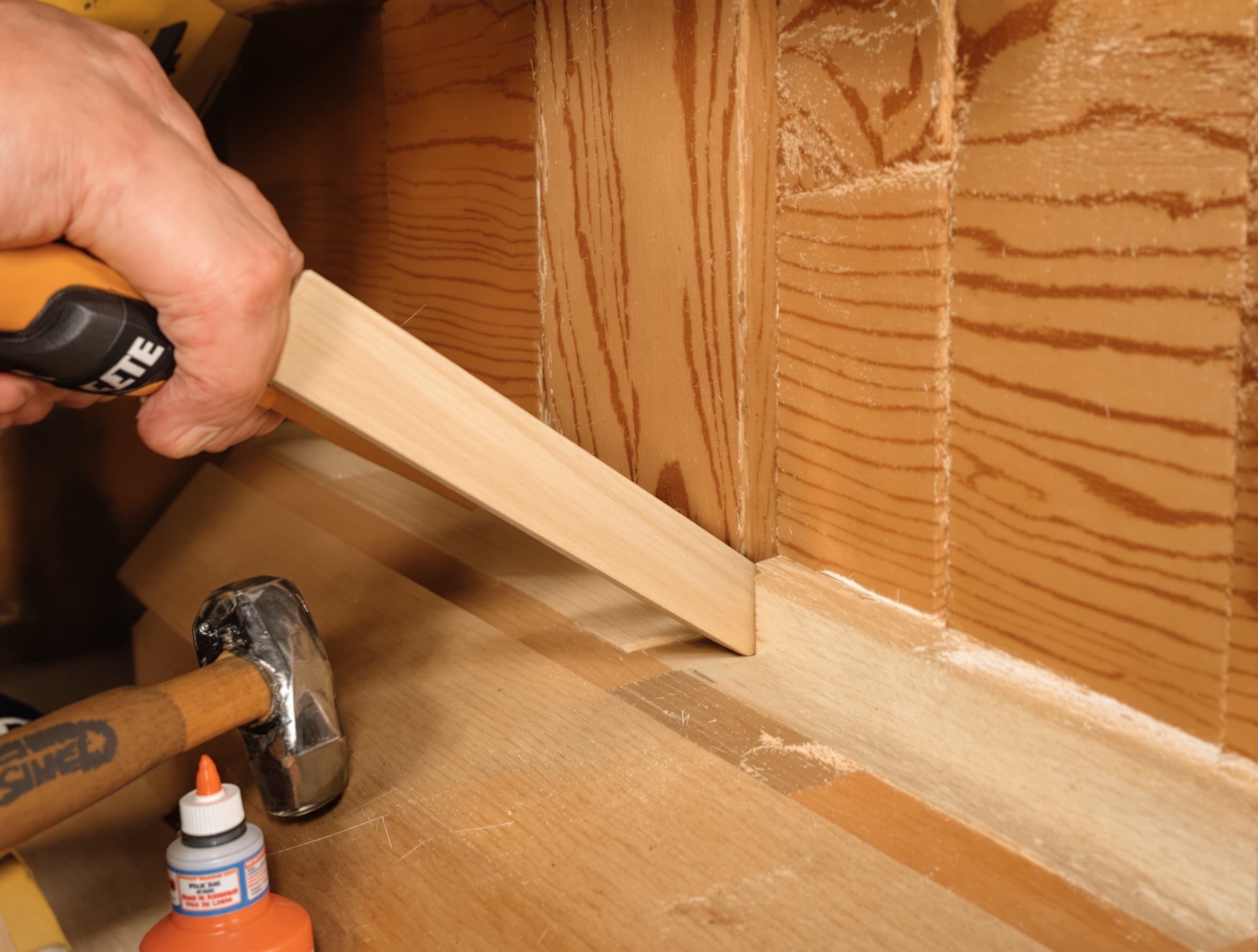
Cut and insert a shim into looser gaps, trimmed flush with the surface. Don't force an oversized shim; it can create a new gap somewhere else on the same joint.
Sprinkle powdered graphite or talcum powder into the joint to cut wood-on-wood friction directly, without adding moisture the way a liquid lubricant would.
For carpeted stairs: use a stud finder to locate the joists, then drive breakaway screws through the carpet without pulling it up, or lift the carpet at the tread edge to access the subfloor directly if you'd rather work without the carpet in the way.
Fixing the Squeak from Above or Below the Stairs
Most of these fixes work better from underneath the staircase, if you can get access: a basement ceiling, an open stringer, or a closet under the stairs. Working from below lets you see the real joint, apply glue directly into the gap, and drive screws where they won't show on the finished tread. If you can't get underneath, everything on the list still works from the top; you're just relying more on feel than sight to find exactly where the movement is happening. Walk the stairs slowly and pay attention to which specific tread moves before you start. Fixing the wrong joint is the most common reason a "fixed" stair squeaks again a week later.
A squeak right at the top or bottom landing sometimes isn't the staircase at all, it's the subfloor or the transition where the last step meets the floor. The fix follows the same logic (locate the loose spot, drive a fastener, add a shim if there's a gap) but you're working the floor framing instead of a tread joint. If tightening every accessible stair fastener doesn't quiet a squeak that's specifically near a landing, that's the next place to check.
When it's more than a squeak
A squeak on its own is noise, not damage, which is why this guide leads with DIY fixes instead of a repair pitch. But a squeak can occasionally be the first symptom of a bigger problem, not just an annoyance on its own. If you notice the tread flexing or dipping underfoot, visible cracking, or the noise coming back within days no matter what you try, that's no longer a maintenance issue. Our repair or replace guide covers exactly when a symptom like this points to something structural.
What tools do I need to fix a squeaky stair?
You'll need a drill, screws of the correct length, wood glue, shims, and, for carpeted stairs specifically, a stud finder and an awl for probing through the carpet to locate the right spot. Nothing on this list is specialized; it's a basic kit most homeowners already have or can pick up cheaply at any hardware store, and none of it requires power tools beyond a basic drill.
Why do my stairs only squeak in certain seasons?
Because wood moves with humidity and temperature, and that movement opens and closes the same gaps that cause squeaks. This is especially noticeable in Portland, where wet winters swell wood tight and dry summers shrink it back down. A stair that's silent in July can start squeaking again in January purely from moisture, with nothing else about the staircase having changed.
Can I fix a squeaky stair without removing the carpet?
This is one of the most common repair situations, and it doesn't require pulling up the carpet. Use a stud finder to locate the joists and structural framing underneath, then drive breakaway screws through the carpet directly into the tread and riser at the joint. The screw heads snap off below the carpet pile, so there's nothing to see or feel once it's done.
Squeaky Stair Questions We Hear Most
Is it worth paying someone to fix a single squeaky stair?
For one isolated squeak, DIY is almost always the better value: the fix takes minutes and costs a few dollars in hardware. Paying for a repair visit starts to make sense once you're dealing with multiple squeaks across a run, a squeak that keeps returning after a fix, or a symptom that might be structural rather than cosmetic, which is where staircase repair earns its cost instead of another round of shims.
Will WD-40 fix a squeaky stair?
No, and it's worth addressing directly since it's a common instinct. A squeak comes from a structural gap or loose fastener, not from a lack of lubrication, and spraying oil on a finished wood surface doesn't close that gap. It just attracts dust and can leave a residue on a stained or painted stair. Powdered graphite worked directly into the joint is a different thing entirely from spraying a liquid lubricant on the surface, which is why step five above calls for graphite specifically.
When should I call a professional instead of DIY-ing it?
Call a professional if the squeak persists after trying the fixes above, or if you notice actual structural movement rather than just noise: a tread that flexes visibly underfoot, a stringer that seems to shift, or damage beyond a simple gap. At that point it's a stair repair job, not a maintenance one, and continuing to chase it with shims and glue risks masking a bigger problem instead of solving it.
Can a squeaky stair get worse if I ignore it?
The squeak itself won't get worse on its own; it's noise, not damage. But whatever's causing it (a loosening fastener, a widening gap) generally does get worse with time and continued foot traffic, which is why fixing it now is easier than fixing it later. A joint that just needs a tightened screw today can wear into one that needs a shim or new fastener holes in a year or two.
How do I stop a squeaky stair from coming back?
Once a squeak is fixed, the best way to keep it fixed is routine attention rather than a one-time repair: checking fasteners periodically and being aware that Portland's seasonal humidity swings will always put some movement back into a wood staircase over time. Our staircase maintenance guide covers the inspection routine that catches loose joints before they start making noise again.
Want to keep it from coming back once it's fixed? Our stair maintenance guide covers the upkeep that prevents most squeaks before they start. And if a squeak turns out to be a symptom of something bigger, our guide to repair or replace your stairs covers when that's the case.