
Staircase Maintenance
By Dave Emery, Owner & Stair Builder Updated August 2026
A staircase doesn't need much upkeep, but the little it does need matters. Most stair problems we're called out for started as something small that went unchecked for a year or two. This guide covers the full picture: how often to look, what to look for, and roughly what maintenance and repairs tend to run, so there's one place with a real answer instead of a dozen scattered ones.
How often to inspect your stairs
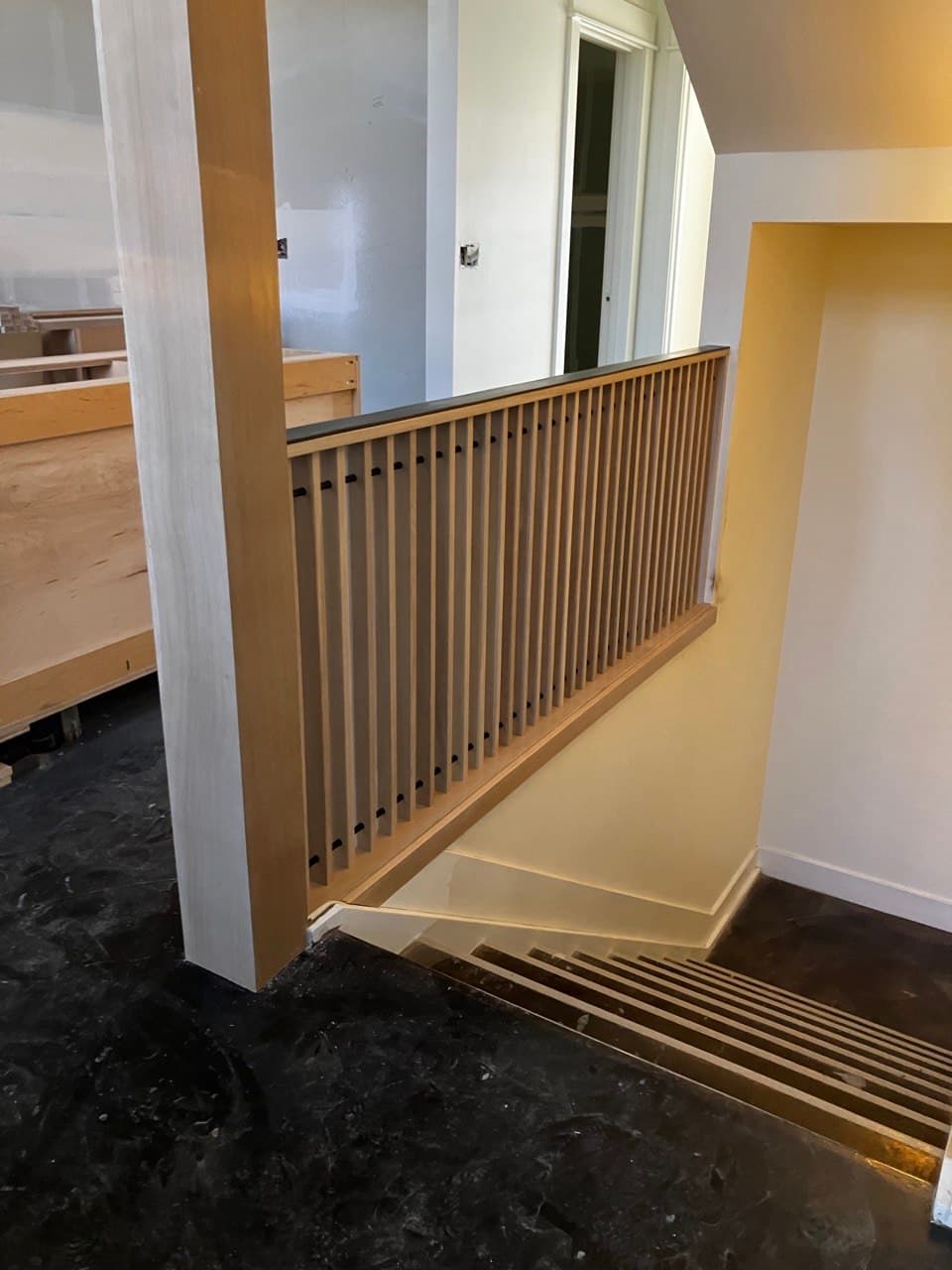
A thorough, professional-level inspection once a year is the general baseline for a typical residential staircase: enough to catch developing problems before they become expensive ones. Between those annual checks, a monthly self-check is worth the five minutes it takes: a quick visual scan for new cracks, movement, or wear while you're already using the stairs day to day. Higher-traffic settings (a main household stairway used by a large family, a rental property between tenants, or any commercial setting) warrant more frequent checks than that baseline, simply because more use means problems develop faster.
How Portland's Climate Affects Staircase Maintenance
Wood moves with humidity, and Portland gives it plenty of reason to. A wet winter followed by a dry summer means any wood staircase in the region goes through more expansion and contraction over a year than the same staircase would somewhere with a stable climate. That movement is exactly what loosens fasteners, opens gaps, and eventually causes the squeaks and wobbles this guide's inspection checklist is designed to catch early. Exterior stairs face an even more direct version of the same problem. See our outdoor stairs page for how material choice affects durability outside. Metal staircases have their own version of climate exposure: humidity and moisture accelerate corrosion at welds and connection points, which is part of why finish and material choice matter as much as fabrication quality. Browse steel & metal stairs for finish options built with that in mind.
What maintenance and repairs typically cost
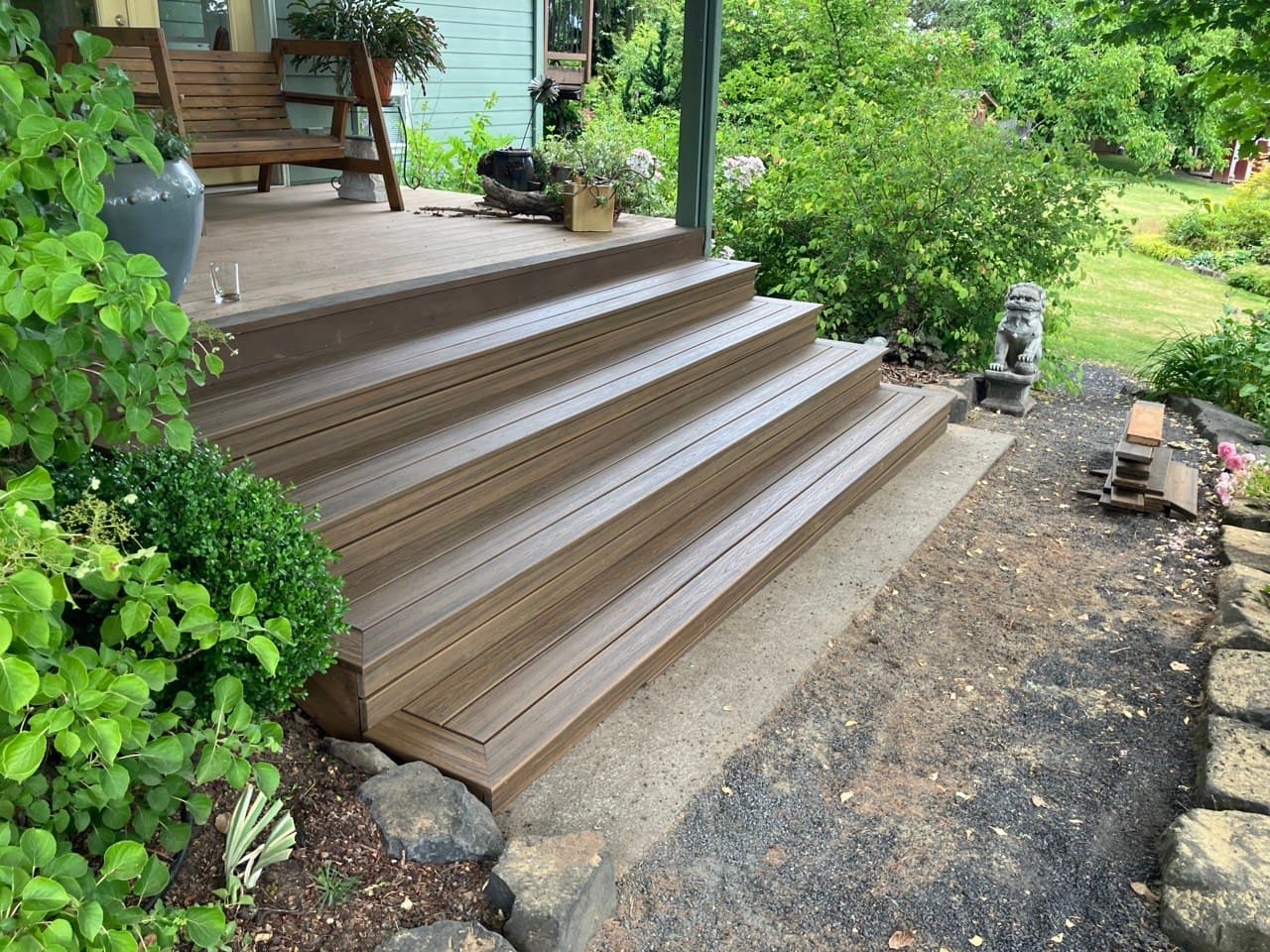
Cost scales with scope, not surprise: a loose baluster costs far less to fix than a structural repair, and catching problems at the small end of that scale is most of what routine inspection is for. Broadly, the ranges fall into a few tiers:
Routine inspection
a straightforward visual and hands-on check, the least expensive line item on this list.
Minor repairs
a single loose baluster, a small hardware fix, a tightened connection.
Moderate repairs
a single step or tread replacement, handrail repair beyond a simple tightening.
Refinishing
sanding and recoating a worn wood surface, priced by square footage rather than by the job.
Major repair
anything touching structure: a stringer, multiple treads, or a rebuild of a section.
These are general tiers, not a quote: every staircase and every problem is different enough that a real number needs a real look. What tends to surprise people is how much of the total cost gap between tiers comes from whether a problem was caught early or not; the same underlying issue is almost always cheaper to fix at the "minor" stage than after it's had a few years to spread. If a repair is already needed rather than just anticipated, our stair repair services page covers scope and process in more depth.
Inspection checklist
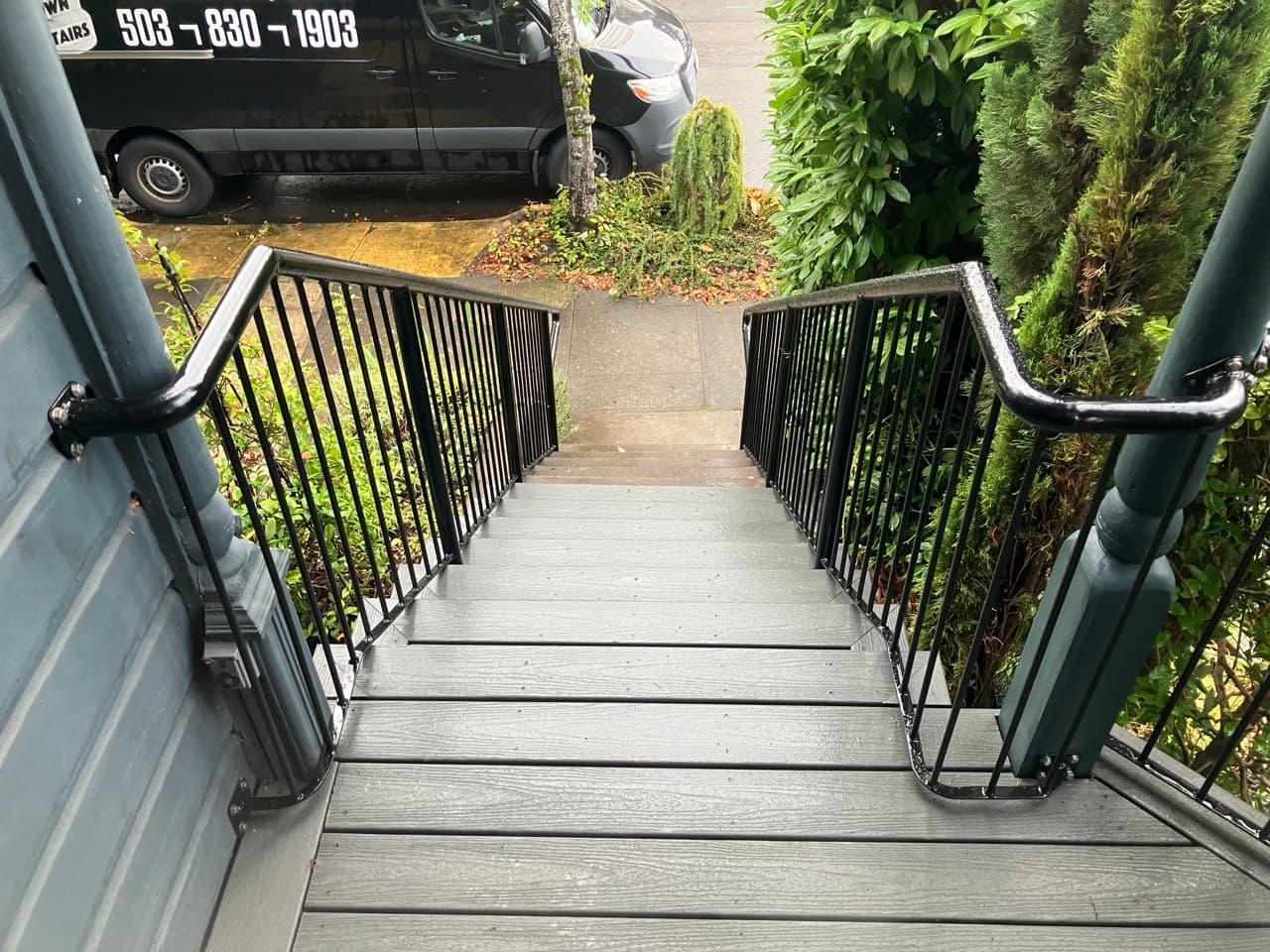
A thorough inspection covers six things, in roughly this order:
Tread and riser condition
cracks, chips, splinters, or any surface that's started to give underfoot. Run a hand along the edge of each tread; splintering often shows up to the touch before it's obvious to the eye.
Handrail stability and height
check for looseness at every connection point along the full run, not just the top and bottom posts, and confirm the rail is still at a safe, graspable height. A rail that's solid at both ends can still have a loose bracket in the middle.
Tread wear and slipperiness
worn finish, polished-smooth spots, or anything that's lost its grip underfoot. High-traffic stairs wear unevenly, so the center of each tread often shows wear well before the edges do.
Material condition
wood rot or termite damage on wood staircases; rust or corrosion at welds and connections on metal ones. Both are easiest to catch early and hardest to catch late, since they typically start somewhere you can't see without looking closely.
Lighting adequacy
enough light to see each tread clearly, especially at the top and bottom of the run where missteps are most common. A staircase that's structurally perfect but poorly lit is still a real safety risk.
Code compliance basics
handrail and guard heights, opening sizes, and anything that looks different from what current code requires. This matters even on a staircase you have no plans to touch, since it flags whether a future renovation might trigger a bigger code review than expected. Our Oregon stair code guide covers the specific numbers rather than repeating them here.
Is there a best time of year to inspect my stairs?
Right after the wettest part of winter and again at the end of a dry summer are the two most useful windows, since that's when a Portland staircase has just finished expanding or contracting the most. Catching movement at either extreme tends to surface loose fasteners and open gaps before they've had a full year to work themselves looser. A once-a-year check timed to late winter or early fall covers both patterns without needing two separate inspections.
What are signs my staircase needs maintenance?
Cracks or chips in a tread, loose or wobbly rails, creaking under weight, loose fasteners, discoloration or water staining (a rot indicator), and peeling or worn finish are the signs to watch for. Any one of these on its own is usually a minor fix. It's when several show up together, or when the same one keeps recurring after a repair, that it's worth a closer look.
How often should stairs be refinished?
Every few years, or whenever wear becomes visible, whichever comes first. There's no fixed schedule that applies to every staircase, since traffic and sun exposure both affect how fast a finish wears. If you're at the point of scheduling a refinish, that's a staircase remodeling project rather than a maintenance task, and it's covered there in more depth.
Do carpeted stairs need different maintenance than wood or metal?
Carpeted stairs need regular vacuuming to prevent grit from grinding into the fibers and wearing them out faster, plus periodic attention to what's happening underneath. Carpet hides the subfloor and treads entirely, so moisture or wear can develop out of sight for longer than it would on an exposed wood or metal surface, where you'd notice a problem the moment you looked down.
What Else to Know About Staircase Maintenance
Is staircase maintenance something I can DIY?
Light cleaning and visual inspection, yes. That's exactly the kind of upkeep this guide is meant to help with. Structural fixes are a different category: if you've spotted a specific issue like a squeak, start with our squeaky stair fixes guide, and for anything beyond that, stair repair is the right next step rather than DIY structural work.
How do I know if wear is cosmetic or structural?
Cosmetic wear affects how the staircase looks (surface scuffs, faded finish, minor discoloration) without affecting how it performs underfoot. Structural wear affects function: flex, movement, cracking that goes beyond the surface, or damage at a connection point. If you're unsure which one you're looking at, our repair or replace decision guide walks through the full framework rather than a quick rule of thumb.
Does routine maintenance prevent bigger repairs?
Yes, and that's the entire premise of catching problems at the inspection stage rather than the repair stage. A loose baluster caught early is a five-minute fix; the same loose baluster ignored for a couple of years can work its way into surrounding wood and turn into a bigger repair. Staircase maintenance is one of the few areas of home upkeep where a small, regular time investment reliably keeps larger costs from developing in the first place.
Does keeping up with maintenance affect resale value or insurance?
A well-maintained staircase reads as one less thing for a buyer's inspector to flag, which matters more at resale than most routine upkeep does. Insurance rarely asks about stair maintenance specifically, but a documented repair history is useful if a slip-and-fall claim ever comes up. Neither is the main reason to stay on top of it: catching a loose baluster before it becomes a bigger repair is worth doing on its own.
Found a problem during your own inspection? Get it repaired before it turns into a bigger job.