
Outdoor & Exterior Stairs
An outdoor staircase is a different build from an interior one. Rain, freeze-thaw, and moss work on every joint and surface year-round, so the materials, the fasteners, the drainage, and the traction all have to be chosen for weather first — not adapted from an indoor design after the fact. That's the difference between exterior stairs that last decades and ones that rot from the cut ends out.
Deck & entry stairs
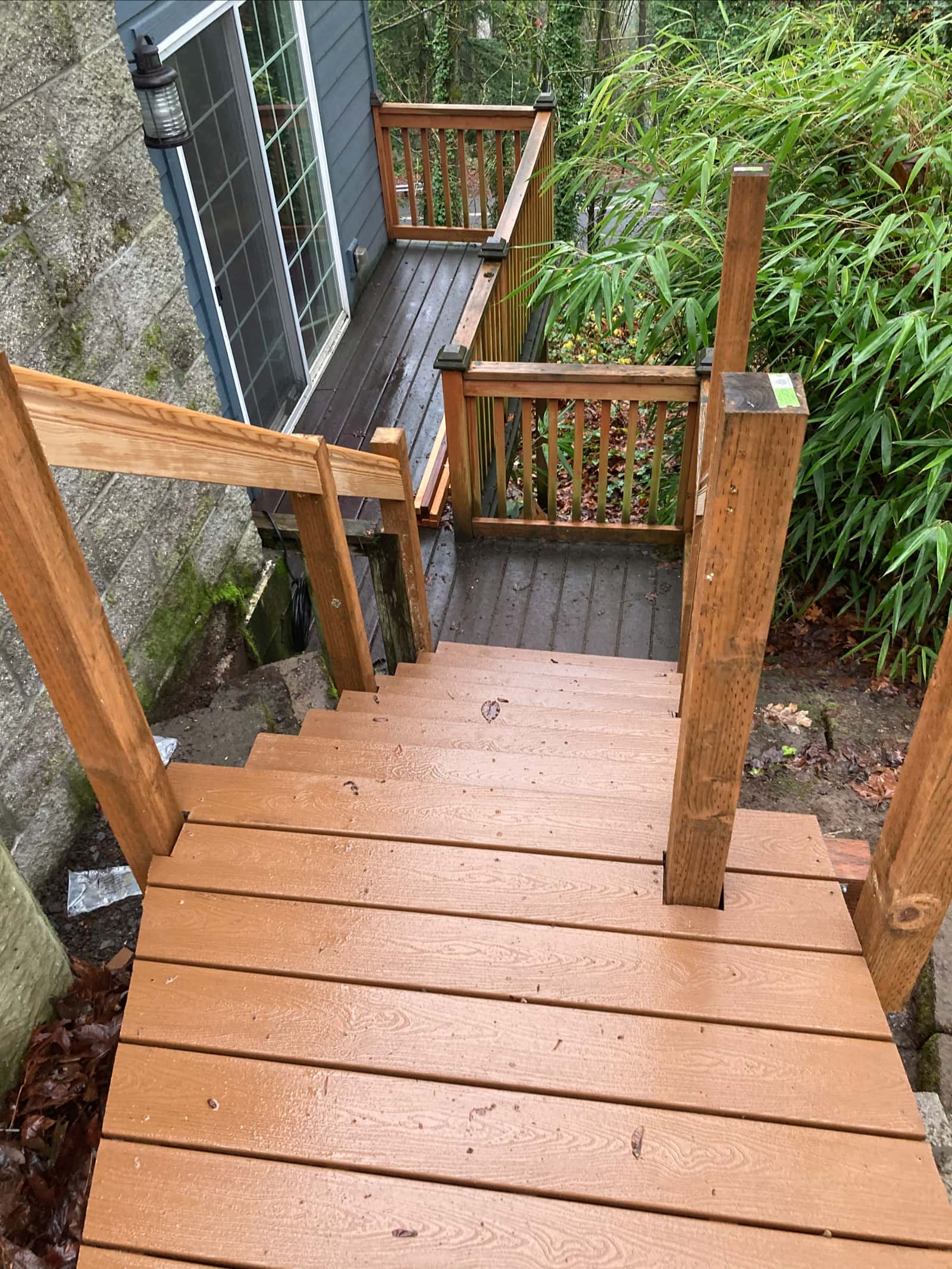
Exterior stair work covers a range of scopes: deck stairs leading down to a yard, entry staircases at a porch or basement door, and full outdoor runs built into a sloped lot. Each is designed to live outside year-round. That's a structural decision before it's a style decision — but it's still a style decision, and the same wood, steel, and mixed-material looks from our indoor work carry outdoors.
To be clear about scope: we build the stairs. Deck framing, waterproofing, and landscaping around them belong to other trades — what we bring is stair-specific structure, craft, and code compliance at the transition points those trades meet.
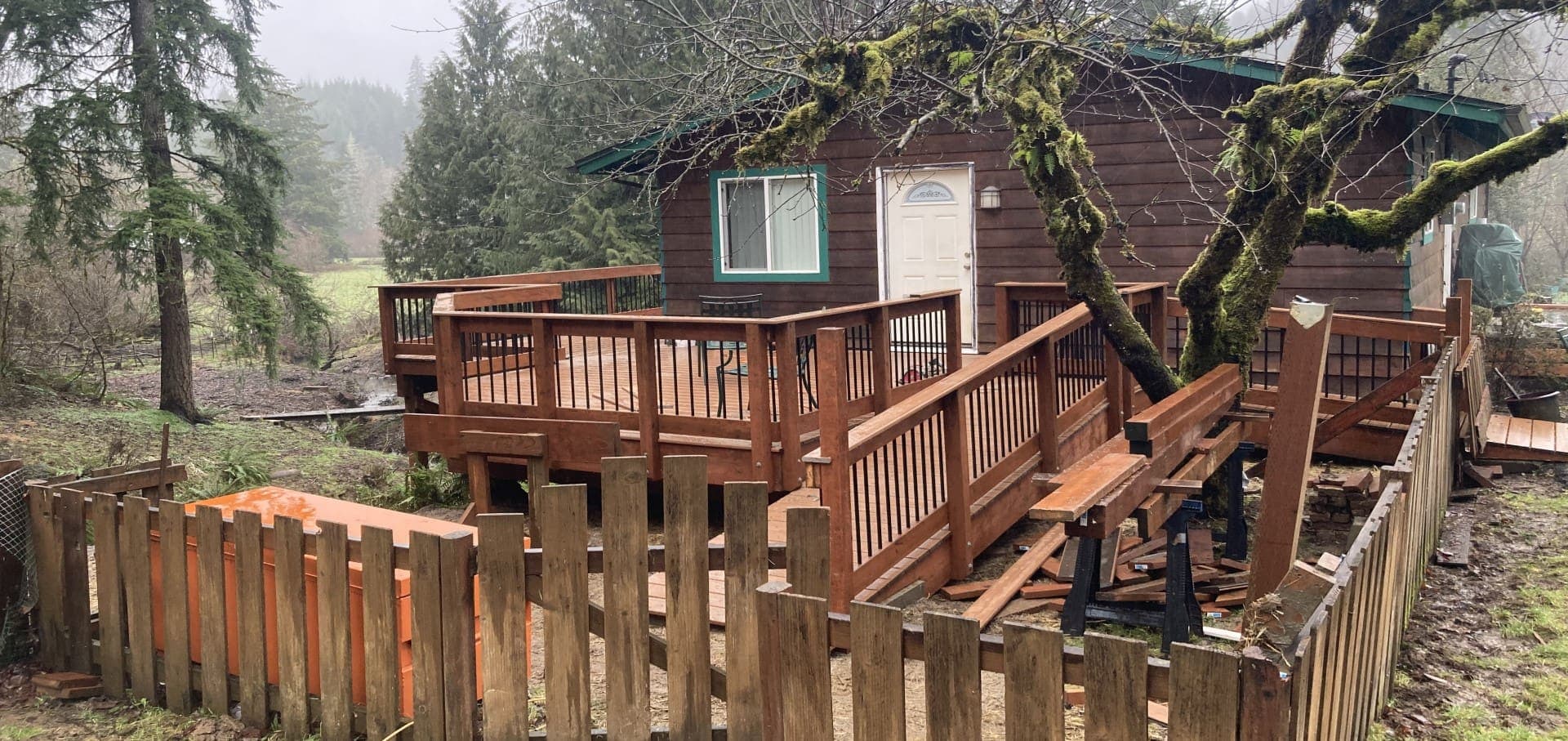
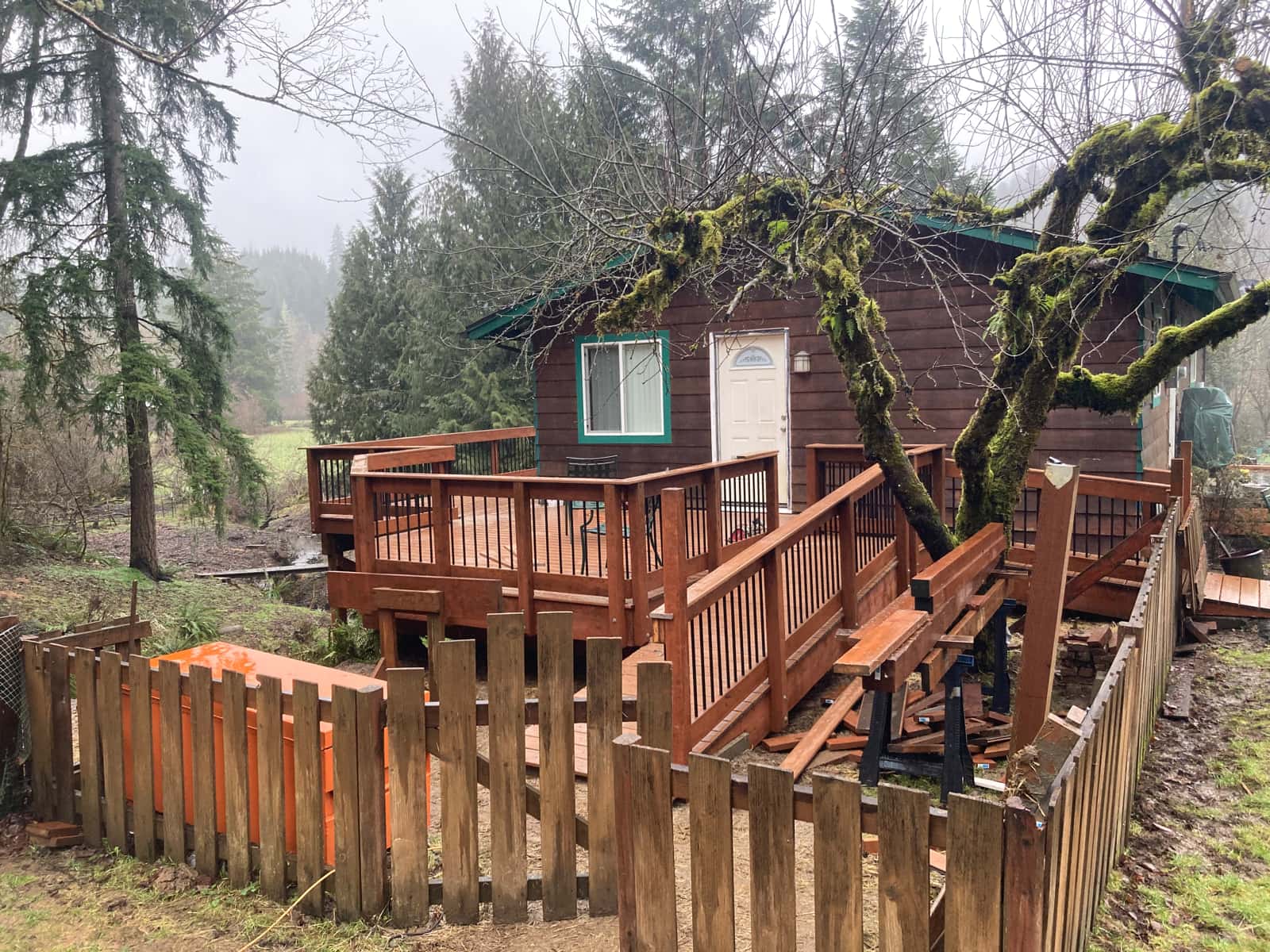
Built for Portland weather
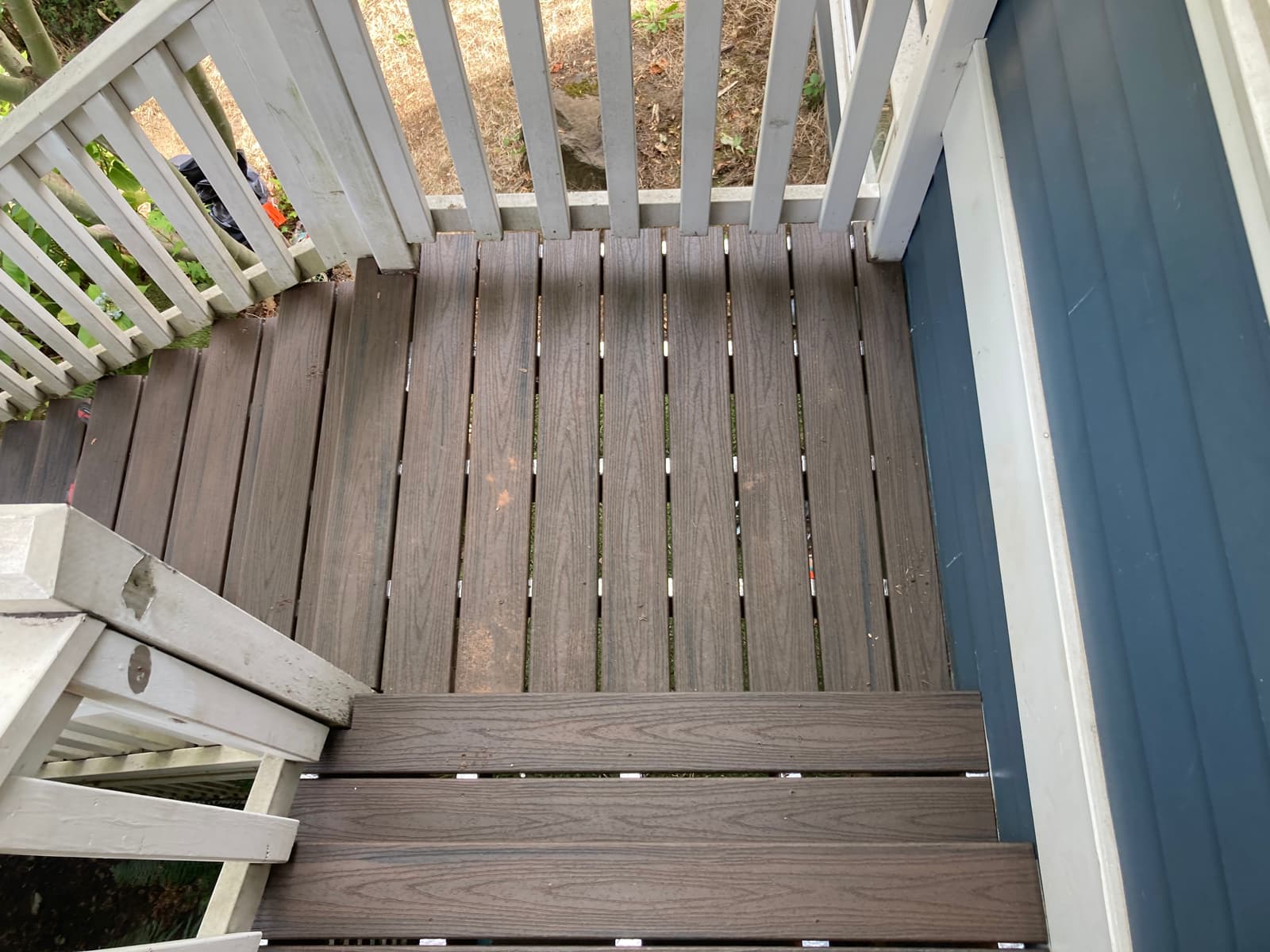
Real PNW rain is the actual design constraint here, not an afterthought. Every outdoor staircase we build starts from the same rule set, learned on jobs around Portland rather than from a catalog:
- Pressure-treated fir for all framing and structure — no exceptions. The species and treatment are rated for ground contact and wet exposure, which is what stringers and posts actually face here ten months a year.
- Galvanized brackets, hangers, and bolts throughout. Standard interior fasteners corrode fast outdoors, and a rusted hanger is a structural failure waiting at the worst joint. Galvanized hardware costs a little more once and never makes the news.
- Sealed cut ends. Every framing cut exposes untreated wood inside pressure-treated lumber. We coat cut ends with sealer or wrap them with joist tape — rot starts at the cuts, so that's where prevention goes.
- Drainage and traction as design inputs. Gaps that let water leave, surfaces that grip when wet, and layouts that don't trap debris where moss gets started.
Material choice matters more outdoors than in. See wood staircase design for how species compare generally, and steel & metal stairs for the structural side — the finishes below are what change outdoors.
Materials for exterior use
Wood, steel, and concrete all show up in exterior stair work, and we build with all three. What goes where:
- Framing and structure: always pressure-treated fir, as above. The visible material conversation is about treads and risers.
- Treads and risers: pressure-treated fir for the practical build, cedar for a naturally rot-resistant step up in looks, and teak or ipe for dense tropical hardwoods that shrug off standing water. On the low-maintenance end, composite decking board (Trex and similar) and PVC treads skip the refinishing cycle entirely — a real consideration on stairs you'd rather use than maintain.
- Steel: outdoor steel gets a finish rated for weather, not bare metal. Our steel is sprayed with industrial enamel from Forrest Paints or powder-coated by Pacific Stainless — two Oregon shops whose coatings we've seen hold up on exterior work, not a spray can and hope.
- Concrete: we form, pour, and repair concrete steps — entries, garden runs, and replacements for crumbling originals. Every concrete tread gets safety grooving cut along the nosing of each step, so the leading edge grips in the rain instead of glazing over.
What's the most durable material for outdoor stairs in Portland's climate?
For structure, pressure-treated fir with galvanized hardware and sealed cut ends — that combination is non-negotiable here. For treads, ipe and teak last longest in the rain, composite and PVC trade some feel for zero refinishing, and concrete with grooved nosings outlasts everything if the look suits the site. Get in touch about your project for a recommendation matched to your exposure rather than a generic answer.
Do outdoor stairs need a permit?
Often yes — exterior structural stair work is treated much like interior work, and guard and handrail requirements still apply. See our Oregon stair code guide for the baseline numbers, and expect your city's permit office to have the final word for your address.
Can you build stairs into a sloped yard or hillside?
Yes — hillside and sloped-lot stairs are common around Portland, and pressure-treated framing with proper footings is built for exactly that. The right approach depends heavily on the grade and access at your property, so ask us about your specific site.
FAQ
How do you keep exterior wood stairs from rotting?
Four things, in order: pressure-treated structure, galvanized fasteners, sealed cut ends (sealer or joist tape over every fresh cut — rot starts where the saw exposed untreated wood), and drainage gaps so water leaves instead of sitting. Species choice and finish do the rest. See our staircase maintenance guide for the ongoing upkeep that protects any exterior staircase over time.
Are metal stairs safe outdoors in wet weather?
Yes, with the right finish and tread surface. Weather-rated coatings — industrial enamel or powder coat — stop corrosion, and a slip-resistant tread finish handles the rain. Bare polished steel outdoors is the thing to avoid, and it's not something we'd spec.
Not sure whether your existing outdoor stairs are worth saving? Our repair-or-replace guide walks the decision. For a new build, see our exterior build process.