
Wood Staircase Design
Wood Species for Stairs
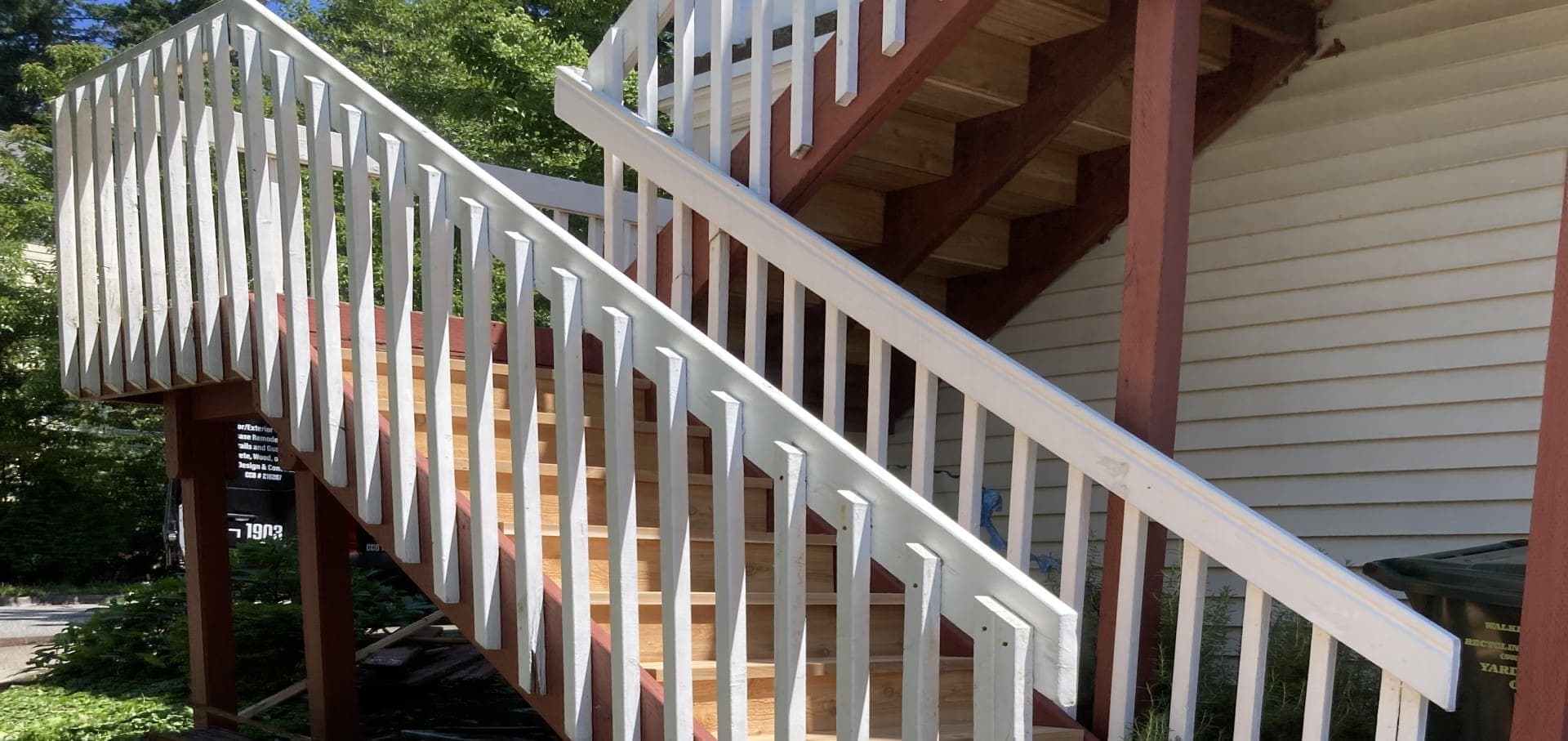
Oak and maple lead on durability: dense, dent-resistant, and low-maintenance for a high-traffic run. Walnut and cherry bring a richer tone and more distinct grain, for a staircase meant to stand out rather than blend in. Mahogany shows up most often on upscale spiral or curved designs. Ash and bamboo round out the lighter end: bamboo in particular as a fast-renewing, eco-friendly option worth considering if that matters to your project.
Hardness is the practical filter for a high-traffic run: a species like oak or maple resists dents and wear far longer than a soft, painted-grade wood would, which is why they show up most often on stairs that see daily use rather than an occasional guest room.
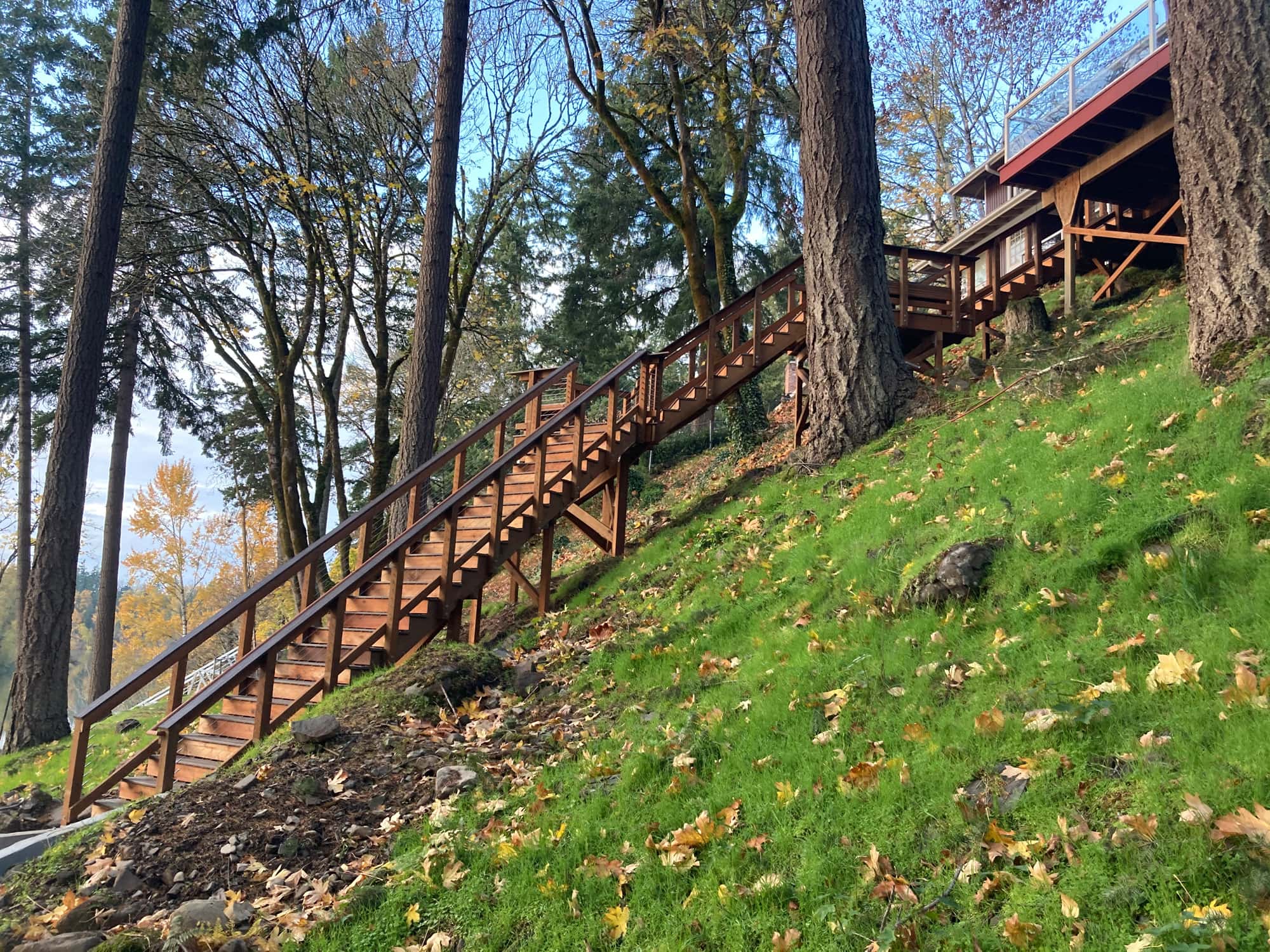
Open-riser & floating wood designs
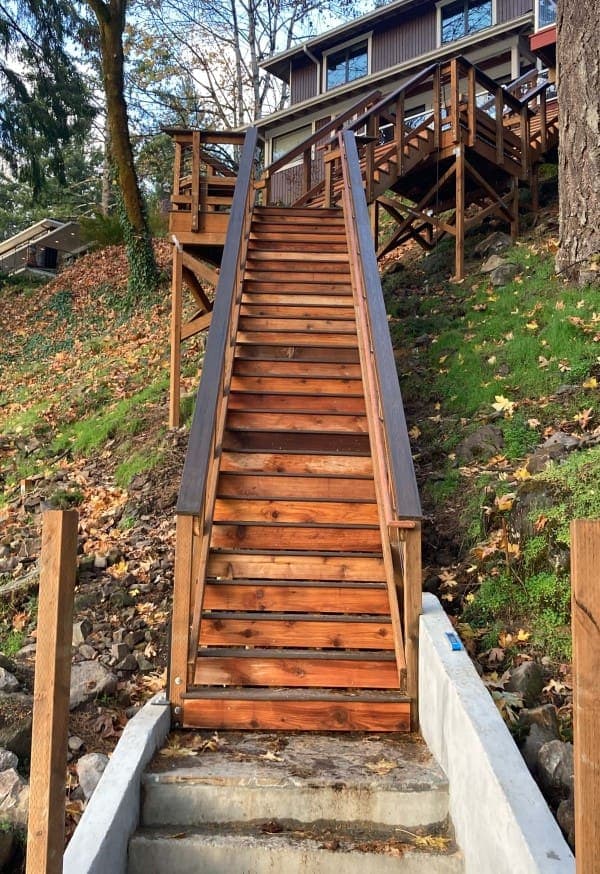
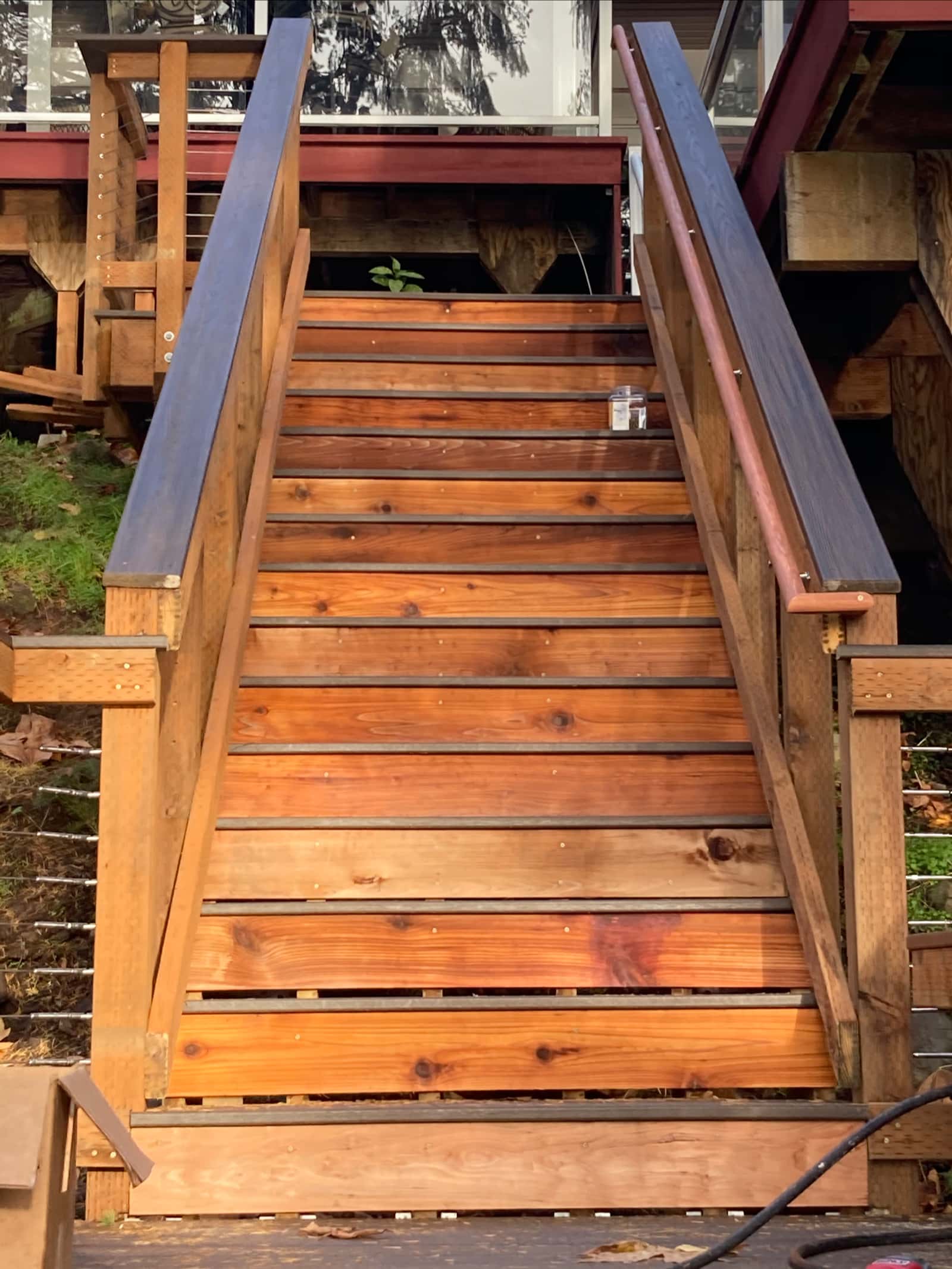
A floating-tread look built in solid wood, often paired with a glass or steel balustrade. See modern staircase design for the open-riser style itself. This section is about the wood species and material choice within it. Open-riser tread spacing has to meet current code; see our Oregon stair code guide rather than us restating the number here.
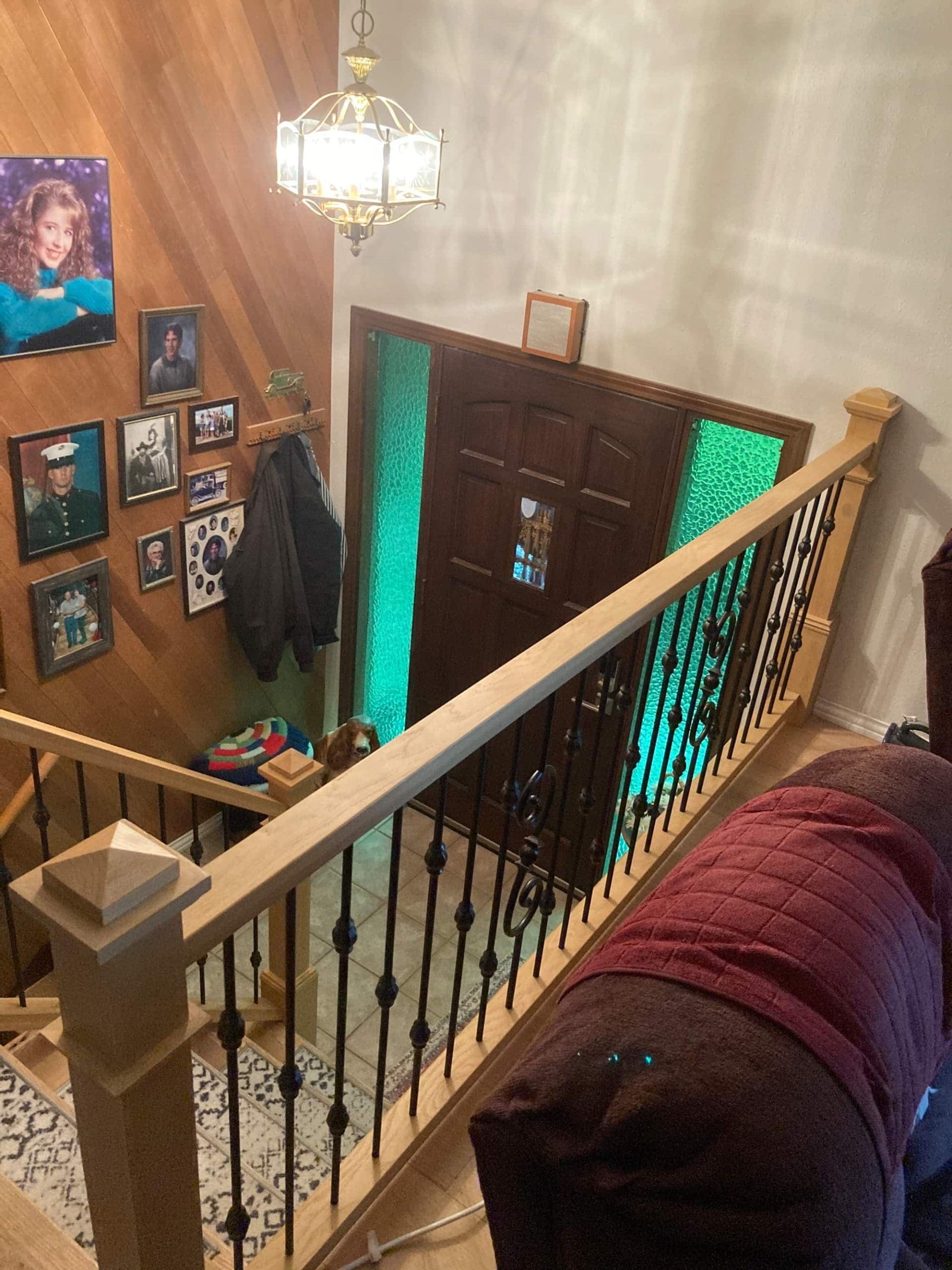
Traditional & carpeted-tread wood stairs
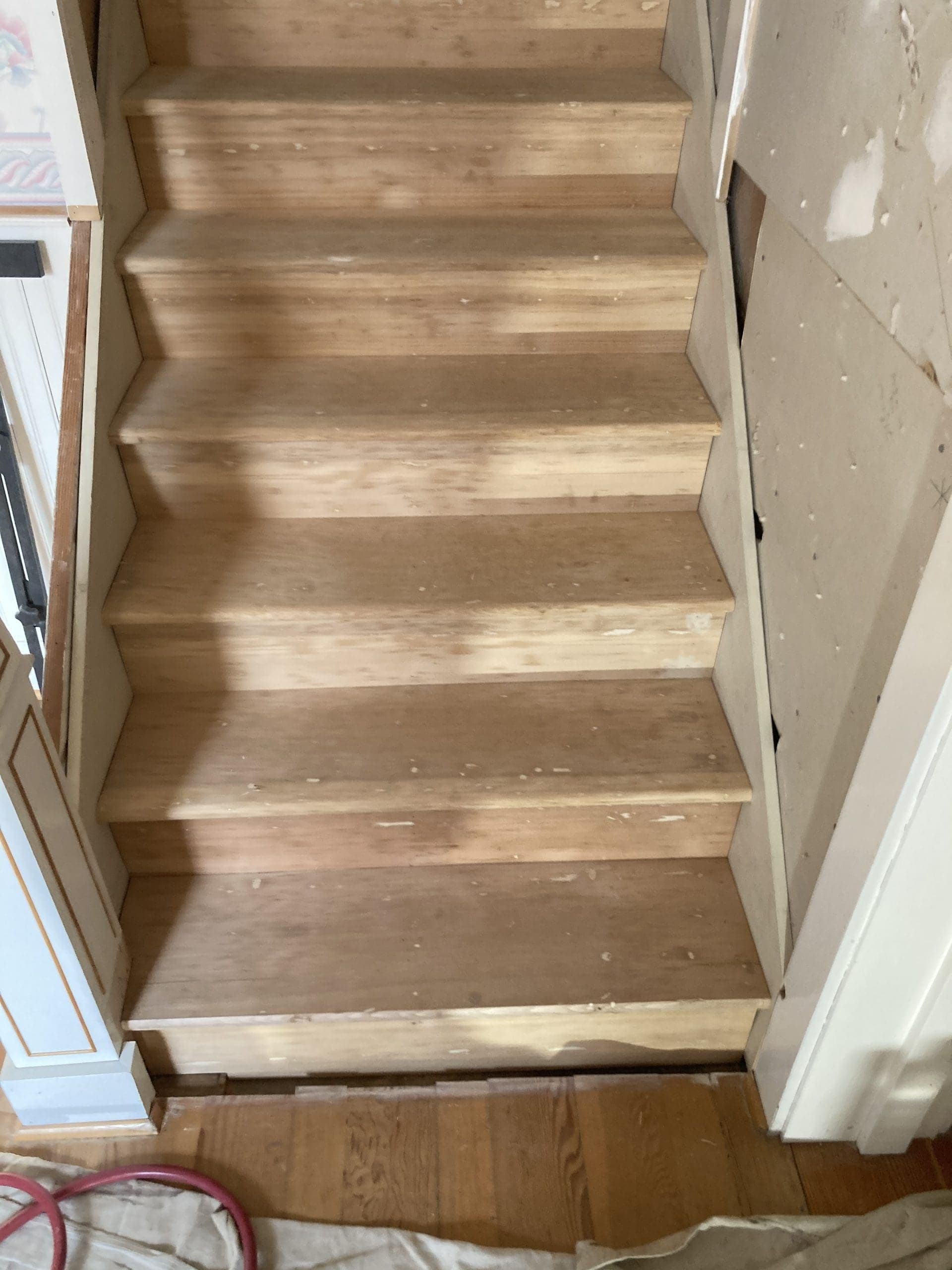
A classic closed-riser staircase, either with a carpet runner for sound dampening or fully exposed wood tread for a cleaner look.
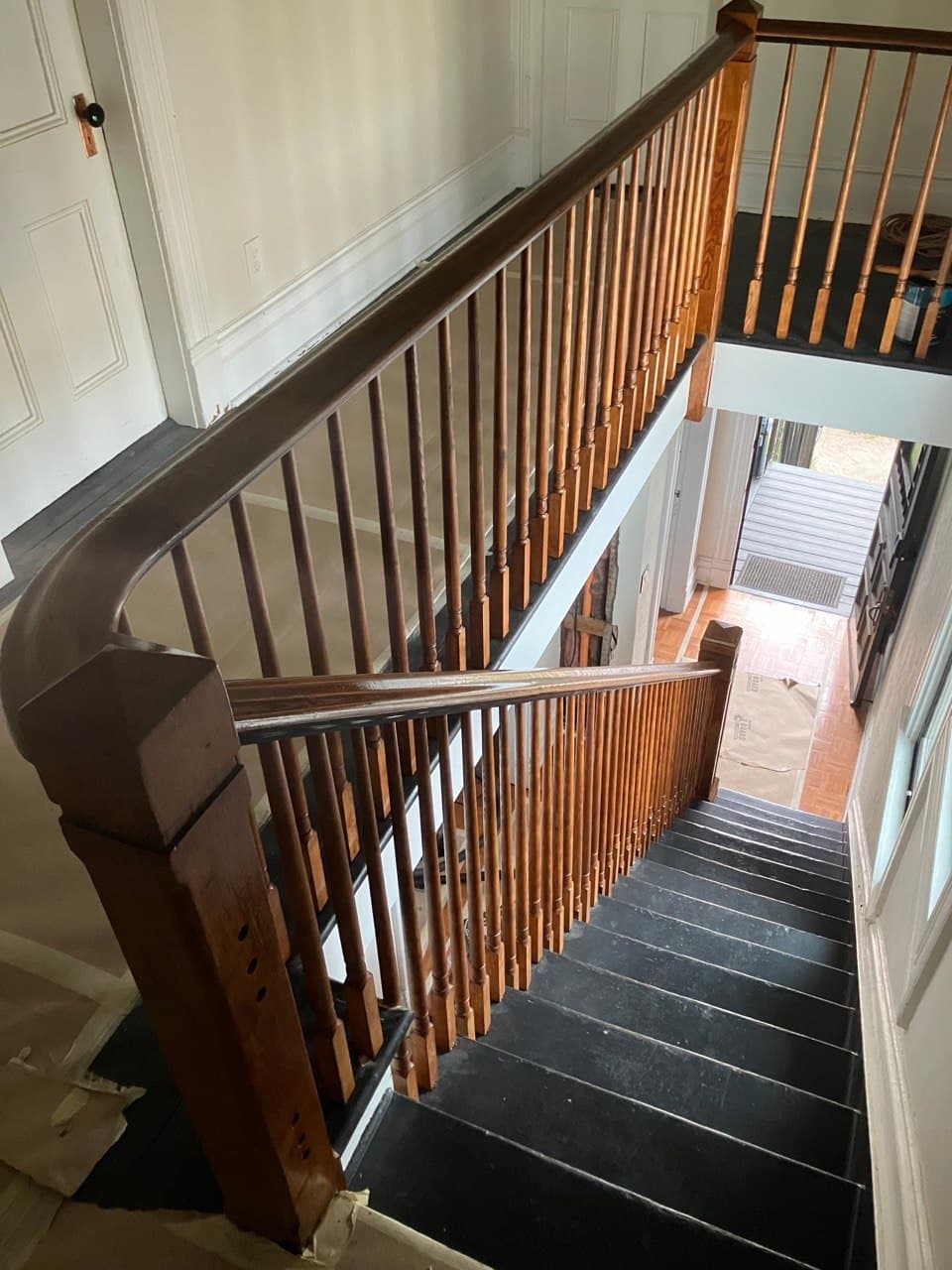
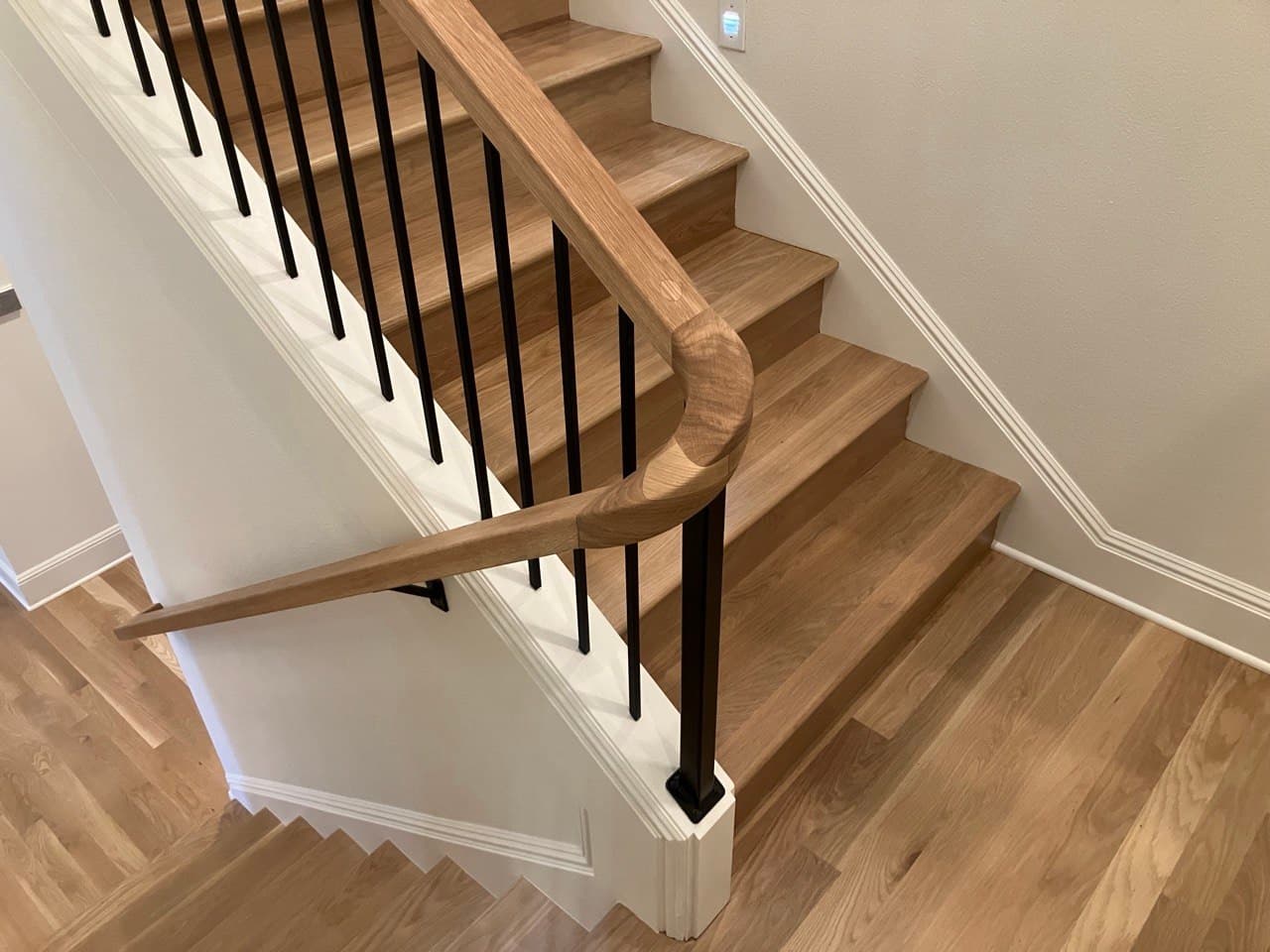
Wood Finish Options
Stain and clear-coat options range from matte to satin to gloss. Refinishing an existing wood staircase is a different project. See staircase remodeling for that instead of a new build.
Which wood species is most durable for stairs?
Oak and maple lead on hardness and hold up best under heavy foot traffic. Softer species can still work well but need more careful finish maintenance over time. See our staircase maintenance guide for what that upkeep looks like.
Is bamboo a good material for stairs?
Bamboo's strength is comparable to hardwood, and it's a renewable material. It's a less common request than oak or walnut, so it's worth setting expectations around lead time and availability before committing to it.
Can I mix wood treads with a steel or glass structure?
Yes, this is one of our most common combinations. See steel & metal stairs for the structural side of a mixed-material design.
Does wood species affect how much a staircase creaks over time?
Less than construction method does. Any wood species moves somewhat with humidity, but proper fastening and joinery matter more for long-term quiet than the species itself. See our squeaky stair fixes guide if an existing wood staircase has already started making noise.
See our wood fabrication process or explore open-riser and floating styles.