
Historic Stair Restoration in Portland
By Dave Emery, Owner & Stair Builder Updated August 2026
Portland's older neighborhoods are full of staircases that were built to be looked at, not just used: turned newels, hand-fitted joinery, details that don't get built the same way anymore. Restoring one well means understanding what era it came from and what that era's builders were doing, not just refinishing whatever's there. This is our custom build and restoration process applied to century-old work instead of new construction.
Restoring stairs in Portland's older homes
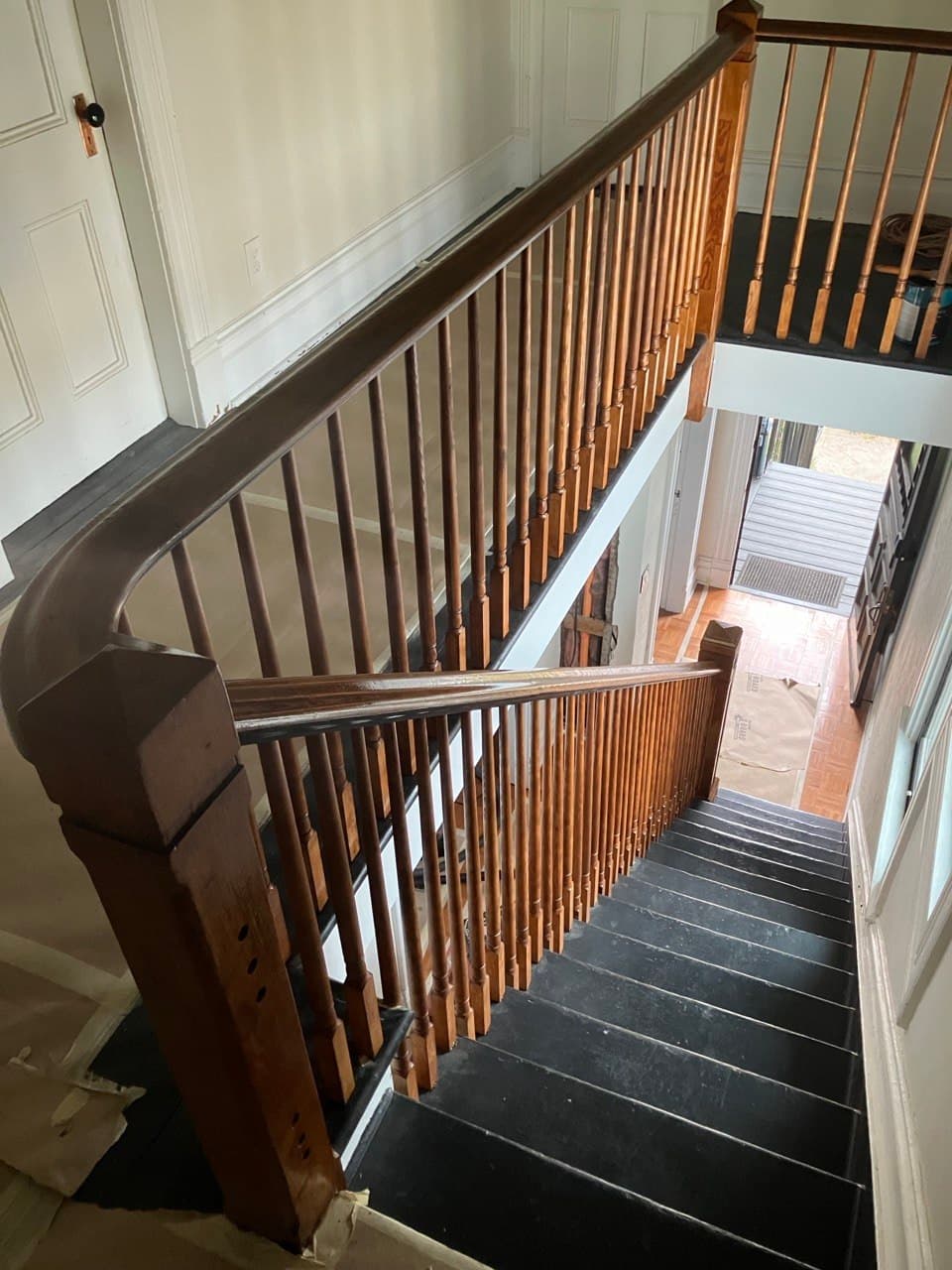
Portland's historic housing stock spans a few distinct eras, and each one built staircases differently.
Victorian-era homes tend toward turned newel posts and spindles: lathe-turned, decorative, often the visual centerpiece of the entry hall. These staircases were frequently designed to be seen from multiple rooms at once, which is part of why so much attention went into the newel and baluster detailing specifically.
Craftsman-era homes moved toward simpler, square-post joinery in keeping with the style's overall restraint: less ornamentation, more emphasis on proportion, solid material, and visible joinery as a design feature in its own right rather than something to hide.
Colonial Revival staircases sit somewhere between the two, often with cleaner classical detailing than a Victorian but more formality than a Craftsman. Turned balusters are common, but typically simpler and more uniform than their Victorian counterparts.
Knowing which era you're working with shapes every decision that follows, from what "matching" the original even means to what materials and techniques are appropriate to introduce during the work.
What Historic Restoration Involves
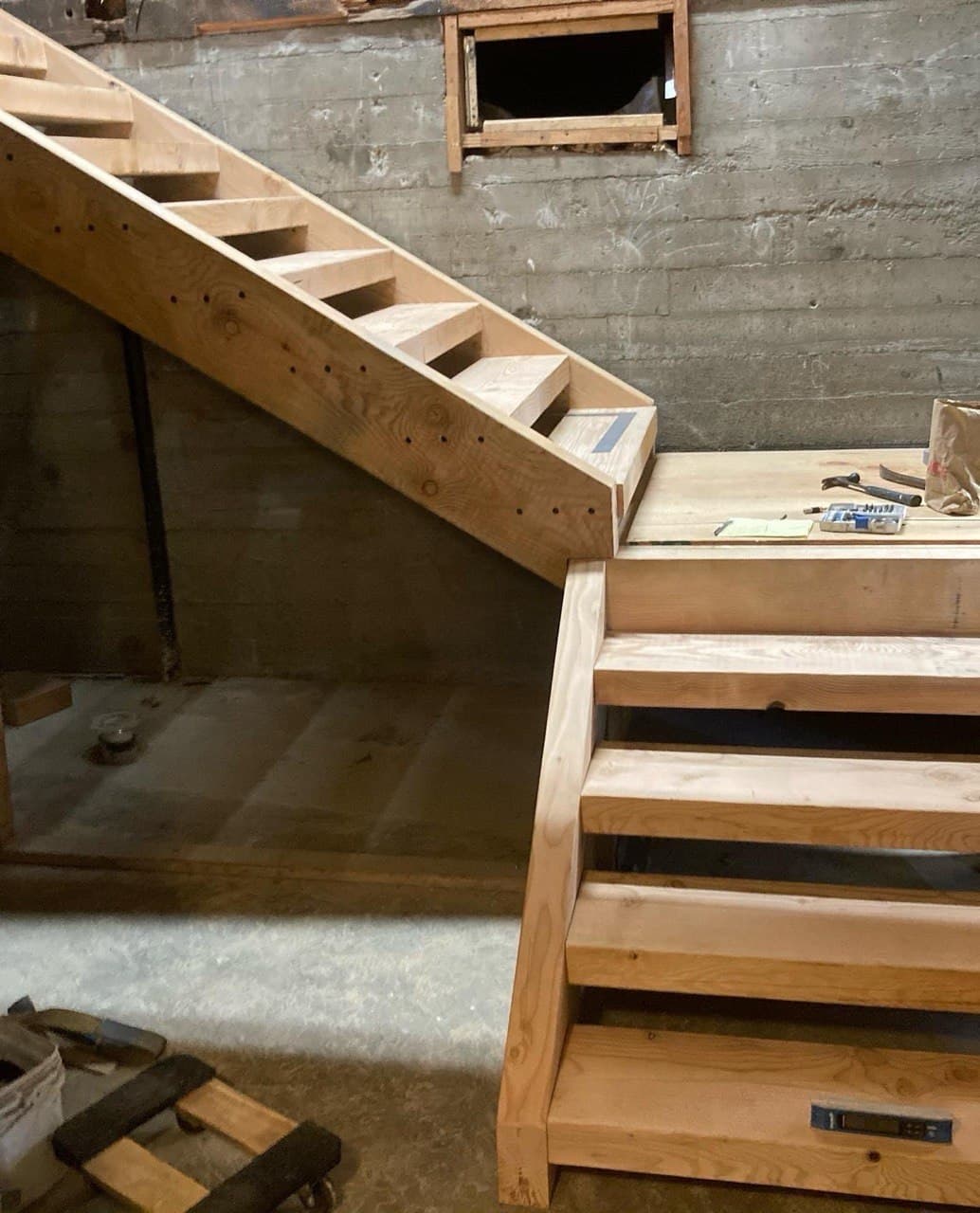
Restoration starts with assessment and documentation of the original staircase: understanding what's original, what's been altered over the decades, and what condition the structure is in before any decisions get made. Photographing and measuring every original detail before anything is disassembled is part of that documentation step, since it's the reference the rest of the project gets checked against later. From there, period-appropriate materials get sourced to match what's there rather than defaulting to whatever's convenient. Structural repair comes before any cosmetic work. A beautifully refinished staircase built on a compromised structure isn't a restoration, it's a cosmetic patch. Once the structure is sound, refinishing and protective sealing bring the surface back, and a final inspection confirms the work holds up to both the original design intent and current code where it applies.
Matching Original Materials in a Historic Restoration
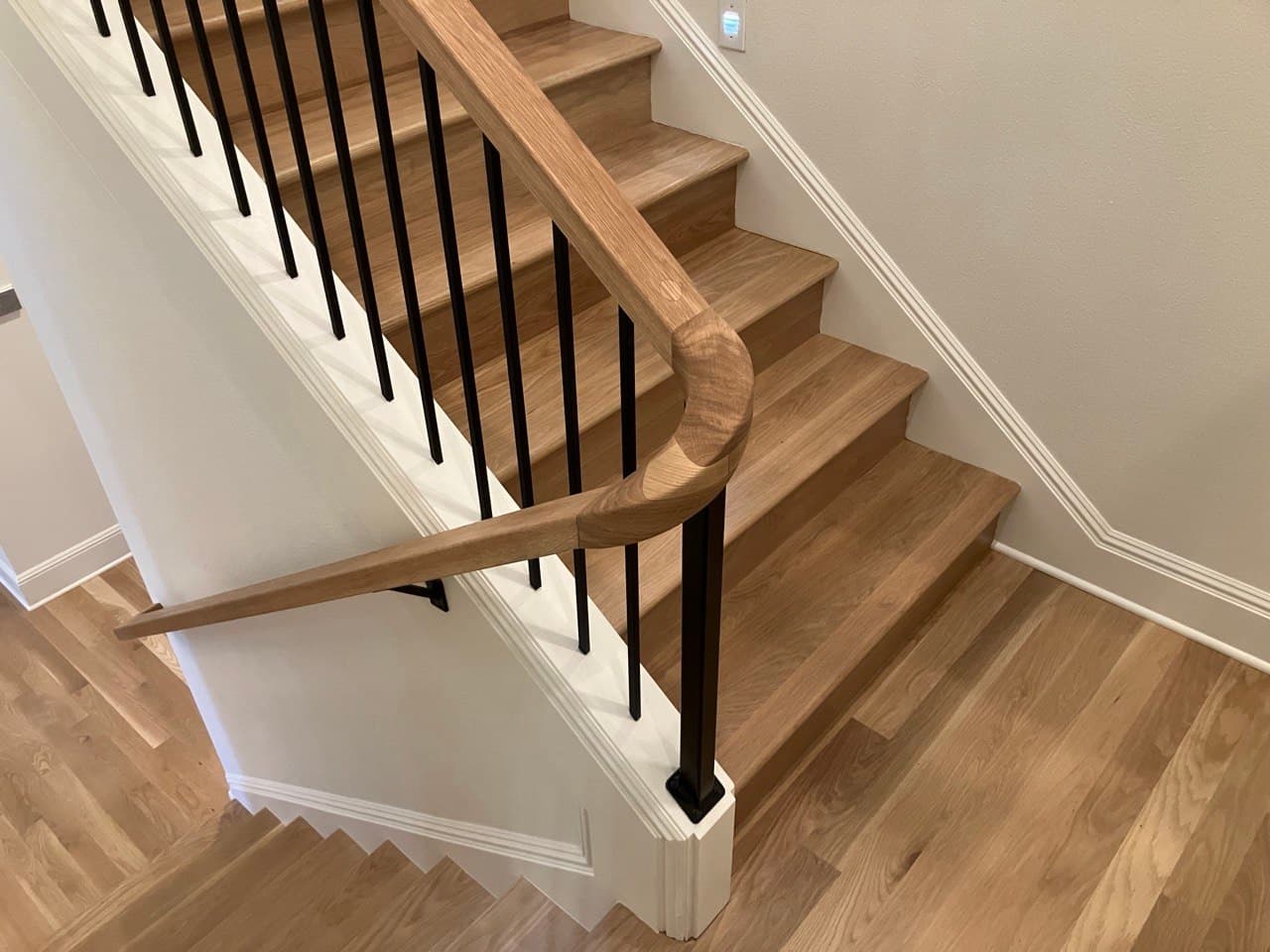
Historic Portland staircases sometimes pair their wood construction with other original materials (cast iron newels or brackets, or granite at entry steps) that need their own approach rather than being treated like the surrounding woodwork. Matching original material means understanding what's there before assuming a like-for-like replacement is possible or appropriate; some original materials and finishes are no longer commercially available in the same form, which is part of what makes this kind of project different from a standard build. Sourcing the closest available equivalent, and knowing where a period-correct alternative is the more honest choice than a mismatched original, is as much a part of the craft as the joinery itself. See wood staircase design for the species and finish options we work with on the wood side of a restoration.
Cast and wrought iron holds up well structurally even when the finish has failed, so a newel or bracket that looks rough on the surface can frequently be cleaned, stripped, and refinished rather than reproduced from scratch. Reproduction becomes the better option once a piece has cracked or lost structural integrity, not just its finish, which is a judgment call worth making in person rather than from a photo.
Why restoration takes a different approach than a standard remodel
A standard staircase remodel starts from what you want the finished product to look like. A restoration starts from what's already there and works backward: the goal isn't to design something new, it's to bring back something that already existed, as faithfully as the surviving structure and materials allow. That changes the order of operations: more time spent understanding the original before any material gets cut, more attention paid to whether a repair can save an original piece versus needing a faithful replacement, and more judgment calls about where "authentic" and "structurally sound" pull in different directions. It's a slower, more deliberate process than a typical remodel, and that's by design rather than inefficiency. The value of a restoration is almost entirely in the parts that were done carefully rather than quickly.
Can a historic staircase be restored instead of replaced?
Yes, in most cases. Restoration is the right call far more often on a historic staircase than on a standard one, because the character and value of the original materials weigh more heavily into the decision. The general repair-versus-replace logic in our decision guide still applies, but with a heavier thumb on the preservation side of the scale.
Does restoring a historic staircase need to meet current code?
Generally yes, though historic properties sometimes qualify for exceptions or a variance process depending on the specific jurisdiction and the scope of work involved. Our Oregon stair code guide covers the baseline requirements. It's worth asking specifically about historic exceptions for your property rather than assuming either that they apply or that they don't.
How do you match original woodwork on a 100-year-old staircase?
By combining period-appropriate material sourcing with careful reference to what's still there: profiles, joinery style, and finish are all clues to how the original was built. Matching a turned newel or a hand-carved detail accurately takes close reference work against the surviving original, whether that original is the piece being restored or a matching piece elsewhere on the same staircase. Where a piece is too far gone to restore directly, that reference work is what lets a replacement match rather than just approximate the original.
What's the biggest risk in a historic staircase restoration?
Discovering structural problems only after cosmetic work has already started. This is exactly why structural assessment comes first, before any refinishing or cosmetic decisions. A staircase that looks structurally sound on the surface can have decades of hidden moisture damage, past amateur repairs, or settling that only shows up once you're inside the structure. Front-loading the assessment is what keeps a restoration from turning into a series of surprises partway through.
Historic Restoration: Questions Portland Homeowners Ask
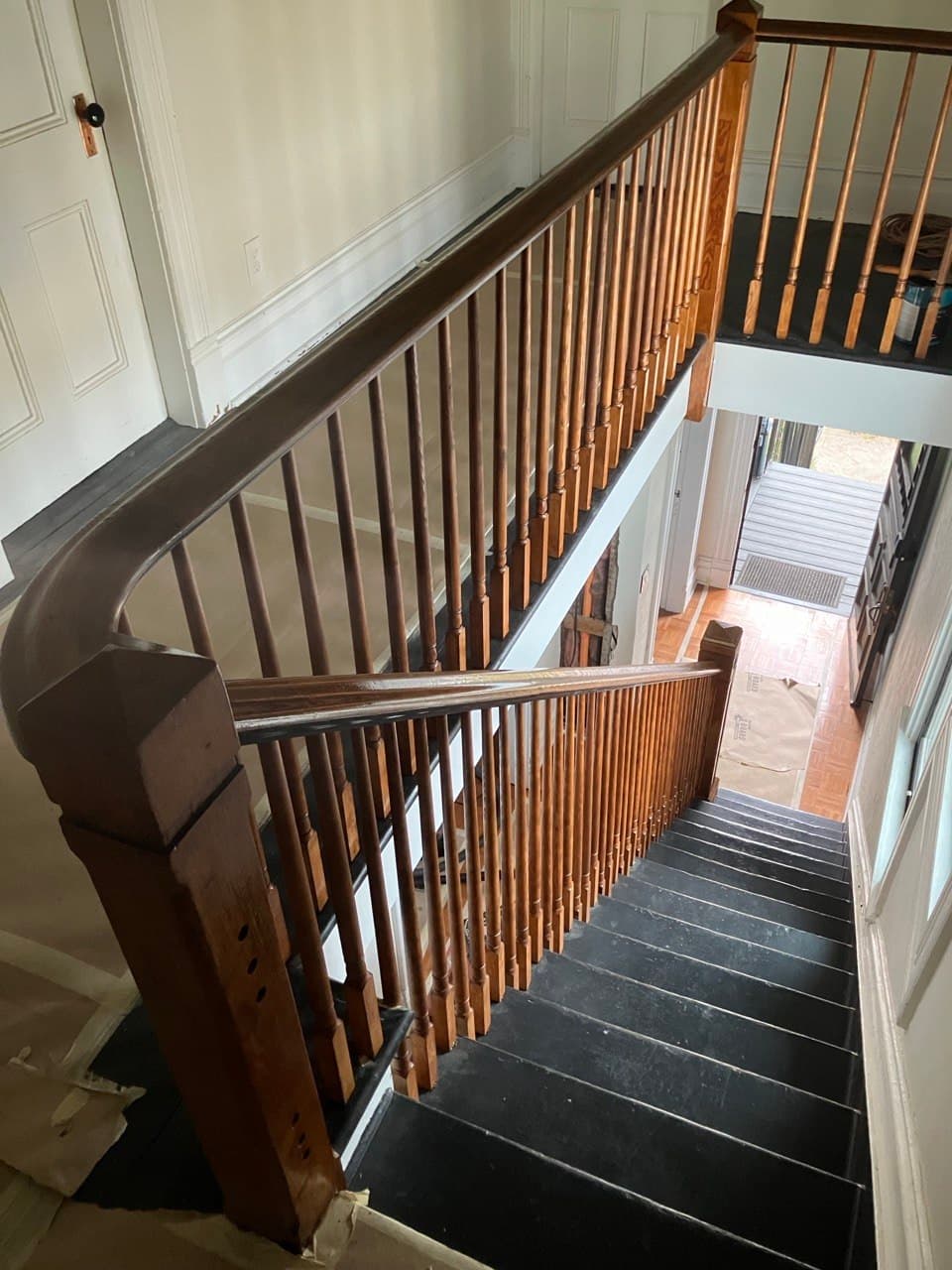
Can a stair get a code-compliant handrail added without losing its historic look?
Frequently, yes. A common approach is extending or supplementing an original handrail's graspable portion in a matching profile and wood species, so the code-required continuous rail is there without replacing the original newel and balusters that give the staircase its character. It's a narrower, more deliberate scope than a full stair railings & handrails replacement, and it's one of the more common requests on a restoration project.
What Portland neighborhoods have the most historic staircases?
Portland's older inner-eastside and inner-westside neighborhoods carry most of the city's Victorian, Craftsman, and Colonial Revival housing stock, which is where this kind of staircase shows up most often. If your home dates to that general era, there's a good chance its staircase has original detailing worth preserving rather than replacing outright, even if decades of paint, carpet, or previous repairs have obscured it.
Do you work on homes with local or national historic designation?
Restoration work on a designated historic property sometimes involves additional review beyond a standard building permit, depending on the specific designation and the scope of work. That's worth raising early in the conversation, so get in touch about your project and we can talk through what your specific property's status means for the process before work begins.
Is historic stair restoration more expensive than a new staircase?
It depends heavily on condition and scope. Sourcing period-appropriate materials and matching original joinery can add time compared to a standard new build, but a restoration that only needs structural repair and refinishing (rather than extensive replacement of original material) can cost less than starting over. The staircase cost guide breaks down new-build pricing factors if you want a point of comparison, though a restoration's price depends on condition in a way a new build's doesn't.
Will a historic restoration preserve my home's original character while still being safe to use?
That's the entire goal of restoration over replacement: bringing the structure and any required safety updates up to a sound, usable standard while keeping the visual details (the newel profile, the baluster spacing, the joinery style) that make the staircase original in the first place. Where code and original design conflict, that's worth a direct conversation about which historic exceptions might apply rather than assuming either the character or the safety has to lose.
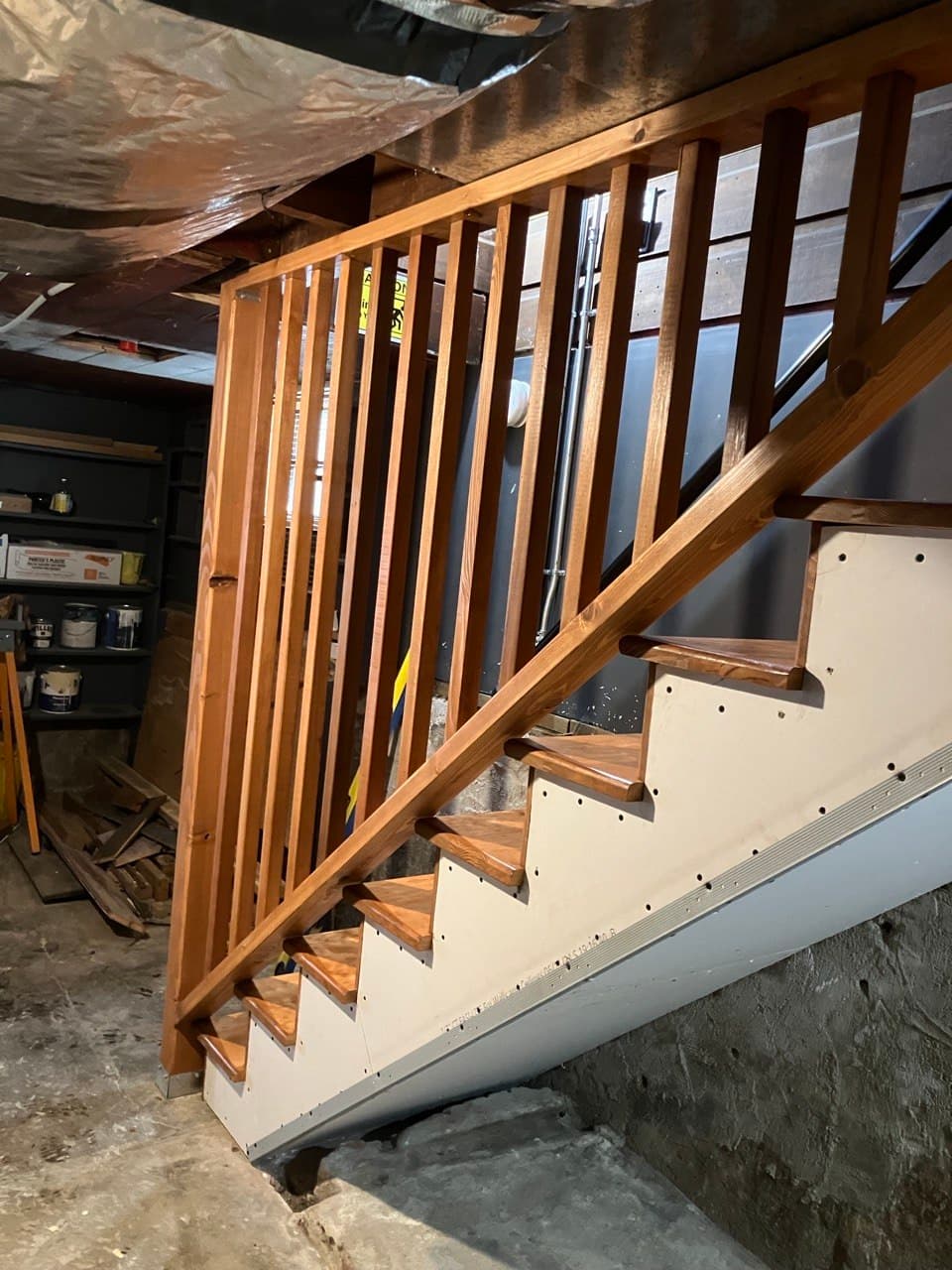
Want to see more of this kind of work? Browse our project gallery for restoration and custom builds side by side.