
Stair Replacement Cost
By Dave Emery, Owner & Stair Builder Updated August 2026
Replacing a staircase is a different job than building one from scratch, and it prices out differently too. You're not just building a staircase. You're tearing one out, often matching an existing opening, and sometimes bringing an old, grandfathered staircase up to current code in the process. Here's what changes the price, by scope, and how to start your stair replacement once you know where you land.
What it costs to replace a staircase
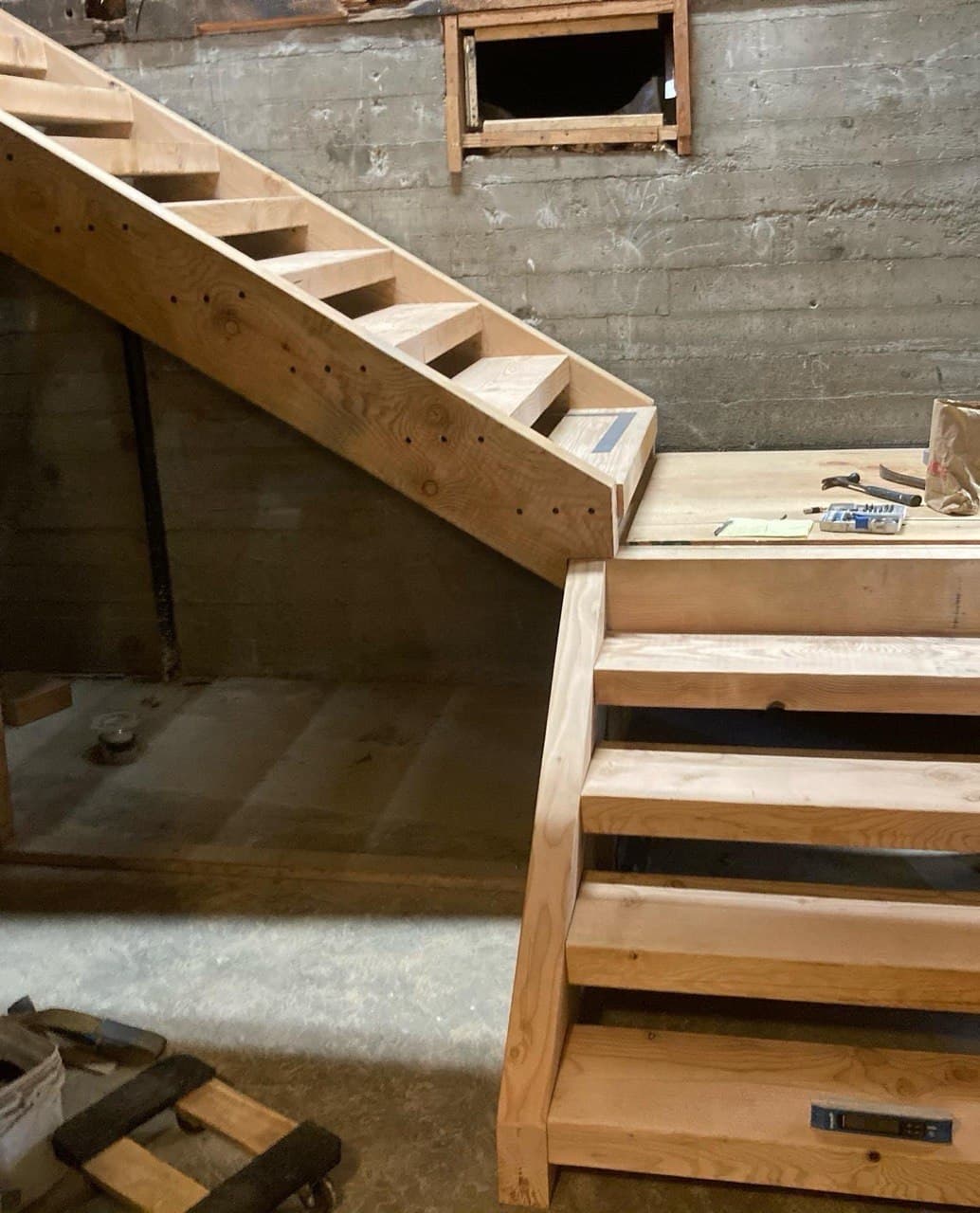
Stair replacement cost depends heavily on how much of the existing staircase you're keeping. Three scopes cover most projects:
- Like-for-like tread and riser swap. The existing stringers (the structural frame) stay in place, and only the treads and risers get replaced. This is the least expensive scope, since the structural work is already done and the job is mostly fabrication and finish carpentry.
- Full staircase replacement. The entire staircase comes out (stringers included) and gets rebuilt from the framing up. This costs more because it's effectively a new build plus demo, but it's the right call when the structure itself has failed, or when you're changing the staircase's design enough that the old stringers wouldn't work anyway.
- Carpet-to-wood tread replacement. A specific, very common version of the tread swap: pulling up old carpet and installing wood treads in its place. Often less straightforward than it looks, for reasons covered in the accordion below.
Where your project lands inside those three scopes is usually obvious once someone's looked at the structure, which is exactly what a site visit is for. Guessing at scope from the surface condition alone is the single most common way a homeowner's budget and a contractor's quote end up mismatched.
What it costs to replace a stair railing or banister
Replacing a railing or banister is frequently its own project, separate from replacing the treads or stringers underneath it. An old railing can be structurally fine on the stairs it sits on while being outdated, loose, or out of code on its own. Railing and banister replacement cost is driven by three things: material (wood, metal, or cable each price differently), the total run length being replaced, and whether the newel posts are being replaced along with the balusters or just the infill in between.
A railing swap is also one of the most common ways an older staircase ends up meeting current code without a full rebuild. Our Oregon stair code guide covers the height and guard requirements a new railing needs to hit. For the install itself, stair railing installation covers materials and process in more depth.
Why replacement costs more (or less) than new construction
Three things separate a replacement quote from a new-build quote for what looks like the same finished staircase.
Tear-out and haul-away
Removing the old staircase is real labor before any new material goes in, and it's labor a new-construction project never has to account for. Depending on access, that can mean careful disassembly rather than just demolition, especially if the space around the staircase needs to stay usable during the project.
Matching an existing footprint or opening
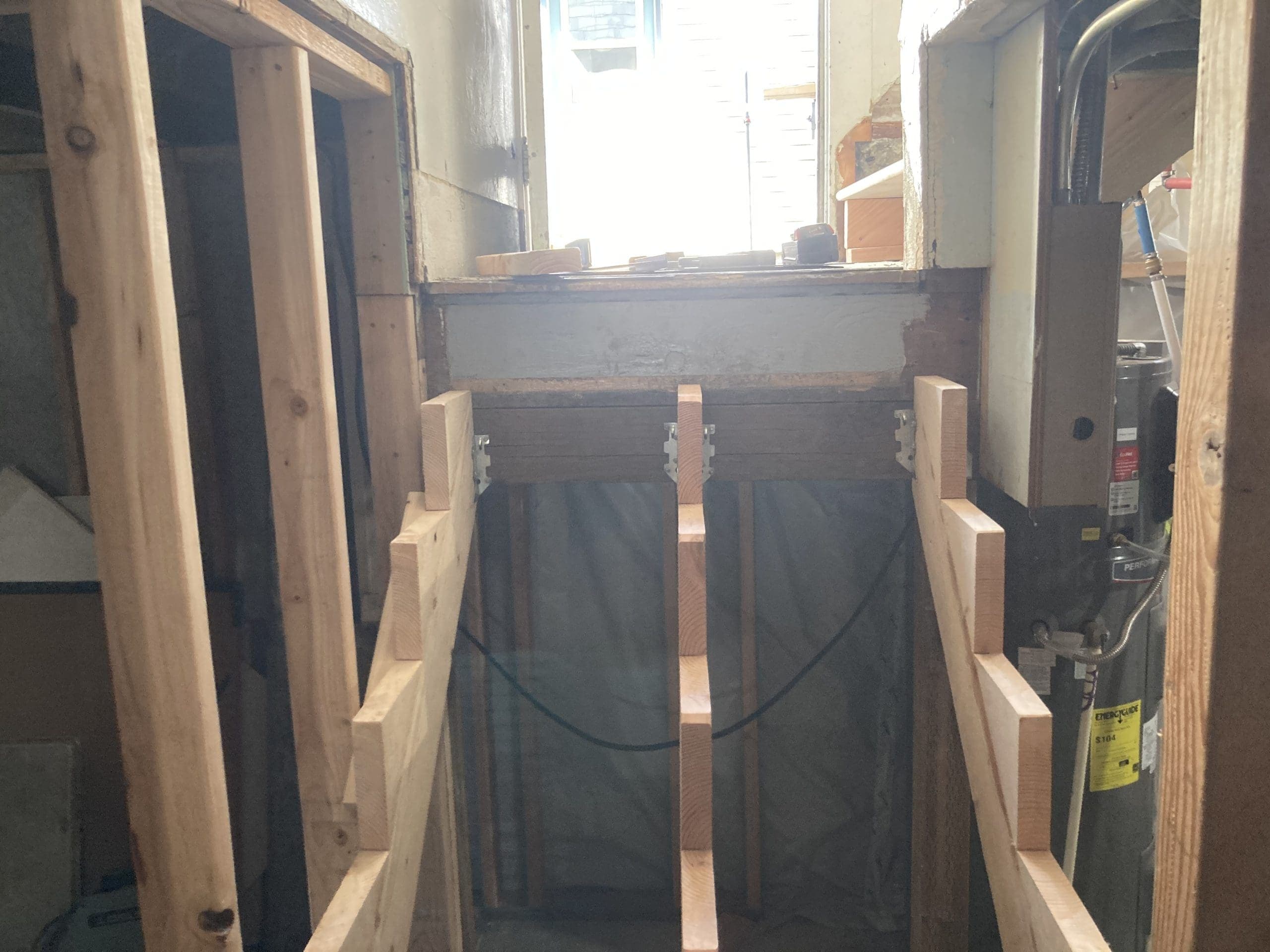
A blank opening gives a designer a clean sheet. An existing opening constrains the run, the rise, and sometimes the landing, which can add engineering time rather than save it, especially if the old staircase was built to a looser standard than current code allows.
Code triggers on older stairs
This is the one homeowners are least prepared for. Old stairs are frequently grandfathered under whatever code was in effect when they were built, meaning a riser height, handrail, or guard that wouldn't pass inspection today can still be perfectly legal, until someone touches it. Replacement is exactly the kind of project that triggers a current-code review. See our Oregon stair code for exactly when that trigger applies and what typically needs to change.
Material choices when replacing vs. building new
Replacement projects have one consideration new builds don't: matching what's already there, or deliberately not matching it. If the surrounding trim, railings, or floor material are staying, a replacement staircase often needs to work with an existing palette rather than starting from a blank material board. Because Stumptown fabricates both wood and welded steel in-house, a mixed-material replacement (say, keeping a wood tread look while upgrading to a steel stringer for a cleaner, more open profile) doesn't mean coordinating two separate vendors on two separate timelines. See wood staircase design and steel & metal stairs for what's available on each side.
Should I replace just the treads, or the whole staircase?
Replace just the treads when the stringers and underlying structure are sound. This is the less expensive path and it's very common. Replace the whole staircase when the structure itself has failed: cracked or rotted stringers, persistent structural wobble, or damage that goes beyond the surface. If you're not sure which category you're in, our repair or replace decision guide walks through the diagnostic signs.
Can I replace carpeted stairs with wood treads?
Replacing carpeted stairs with wood is one of the most common replacement projects we see. The catch is that carpet often hides plywood treads that were never meant to be a finished, exposed surface underneath, so a structural check is a necessary first step before assuming it's a simple swap. Once that's confirmed, it's a straightforward tread-level replacement rather than a full rebuild. If the stringers underneath turn out to need attention too, that's the point where a tread swap becomes a full replacement, and it's better to find that out before work starts than midway through.
How long does a stair replacement take?
A typical single-run replacement takes days, not weeks, once work starts. Custom work (welded steel stringers, curved designs, or anything needing engineering sign-off) adds time on both ends: more design time up front, and more fabrication time before installation, since custom steel and joinery aren't stock parts sitting on a shelf. A site visit is the fastest way to get a real timeline for your specific project rather than a generic range.
Does replacing my stairs require a permit?
Yes, in most cases. Replacing structural stair components in Portland and Oregon typically requires a permit, and replacement is exactly the kind of project that can trigger a code-compliance review on an older staircase. The code requirements page covers what that review checks and how the permit process works.
Do I need to replace the whole railing if only the newel post is damaged?
Not usually. A damaged newel post can often be repaired or replaced on its own, especially if the balusters and handrail above it are still sound. Full railing replacement becomes the better call when the damage has spread beyond the post, or when the whole run is being reworked anyway as part of a bigger replacement. A site visit is the fastest way to tell which category your railing is in.
Stair Replacement Cost: Quick Answers
Is it cheaper to repair or replace a staircase?
Repair is usually cheaper up front, but it's only the right call when the underlying structure is sound. A repaired staircase with failing structure underneath isn't cheaper, it's a deferred replacement with the same bill waiting on the other side. Our guide to repair or replace your stairs walks through the full framework rather than repeating it here.
What affects stair replacement cost the most?
Two things, more than anything else: the material you choose, and whether the structure (the stringers) needs replacing or just the surface (treads and risers) does. Everything else (permits, tear-out, matching an existing opening, a railing swap) matters, but those two decisions set the range you're working within before any of the smaller factors come into play. If you're comparing quotes and the numbers don't make sense, ask each builder which of those two boxes your project falls into; that alone usually explains most of the gap.
How much does staircase replacement cost compared to a brand-new staircase?
Replacement usually costs somewhat more than an equivalent brand-new build in an open space, because of the tear-out, matching, and code-review factors above. But it can also cost less overall than adding a new staircase where none existed, since the opening and floor framing are typically already established. Our staircase cost guide covers new-build pricing in full if you want to compare the two side by side.
Does the cost change if I'm replacing stairs in an occupied home vs. new construction?
Yes, somewhat. An occupied home usually means more careful tear-out and protecting the surrounding finished space during demo and rebuild, since the staircase is probably the only way to reach part of the house. New construction doesn't carry that constraint, which is part of why a replacement project can take more coordination than a comparable new-build staircase, even when the two look similar on paper.
Not sure replacement is even the right call? Read the repair-or-replace guide first, or get your number either way.